
1 April ➤
2 April ➤
3 April ➤
4 April ➤
1 April ➤
4:00 to 7:00 p.m.

Registration
Advanced Onsite Registration
📌 Centennial Foyer
5:00 to 6:00 p.m.
Opening Welcome and Business Meeting
📌 Centennial F
All conference attendees are encouraged to join SAA’s leadership for updates about the conference, current initiatives and future plans. There will be brief remarks from officers, trustees, and committees, followed by time for questions and discussion with the membership.
6:00 to 7:00 p.m.

Social Gathering and Cash Bar
📌 Centennial Foyer
Open to all registrants and their registered guests.
2 April ➤
7:30 a.m. to 6:00 p.m.
Registration
📌 Centennial Foyer
8:00 a.m. to 6:00 p.m.
Book Exhibits
📌 Centennial A
Browse recent publications and meet informally with representatives from several presses.
8:00 to 9:00 a.m.

Professionalization
Publishing in an Academic Journal: A Discussion by Journal Editors
📌 Agate C
Sponsored by Shakespeare Quarterly
ORGANIZERS: Vanessa I. Corredera, Baylor University, Arthur L. Little, Jr., University of California, Los Angeles, and David McInnis, Shakespeare Quarterly
Light refreshments served.
Join the editors of several peer-reviewed journals for coffee and informal conversation about submitting work for publication: what to submit, where to submit, and what to expect after you’ve submitted it. All are welcome, and early-career scholars are particularly encouraged to attend.
8:30 to 10:30 a.m.
Seminar
The Adaptability of Adaptation
📌 Mineral A
LEADER: Rebecca Hixon, St. Bonaventure University
Does adaptation operate differently in different contexts, spaces, genres, geographies, etc.? Does it change shape when paired with other modes of reading, performing, or thinking Shakespeare? This seminar invites participants to think about adaptation capaciously—at both the level of theory and practice. Papers that pair an exploration of adaptation with other methodologies such as critical race theory or performance studies are especially welcome.
- Ved Dutt Arya, Ashoka University, Delhi-NCR, India
- Elizabeth Burow-Flak, Valparaiso University
- Jonathan Burton, Whittier College
- Walter I. Cohen, University of Michigan
- Michael D. Friedman, University of Scranton
- Patrick Aaron Harris, University of South Carolina
- Elizabeth Zeman Kolkovich, Ohio State University
- Alfredo Michel Modenessi, Universidad Nacional Autónoma de México
- L. Monique Pittman, Andrews University
- Adam Rzepka, Montclair State University
- Lucia Scheckner, New York, NY
- Laryssa Schoeck, Shakespeare Institute, University of Birmingham
- Barbara Sebek, Colorado State University
Seminar
Baz Luhrmann’s William Shakespeare’s Romeo + Juliet at Thirty (Hybrid Session)
📌 Mineral D
LEADERS: Gemma Kate Allred, Université de Neuchâtel, Benjamin Broadribb, London, UK, and Edel Semple, University College Cork
This seminar explores the legacy of Luhrmann’s Romeo + Juliet (1996) across Shakespearean culture and global popular culture. We invite papers considering Romeo +Juliet’s legacy across cultures and media, exploring how Luhrmann’s film has influenced the performance and adaptation of Shakespeare; where, how, and why echoes and aftershocks of Romeo + Juliet can be found in cultural objects from the past three decades; and the evolution of the film’s reception and status over time.
- Victoria Bladen, University of Queensland
- Yoojung Chun, Harvard University
- Carla Della Gatta, University of Maryland
- Valerie M. Fazel, Arizona State University
- Jennifer Flaherty, Georgia College
- David W. Hartwig, Weber State University
- Diana E. Henderson, Massachusetts Institute of Technology
- Jennifer R. Holl, Rhode Island College
- Kristine Johanson, Universiteit van Amsterdam
- Melissa M. Johnson, Lyon College
- Mark Beatrice Kaethler, Medicine Hat College
- Courtney Lehmann, University of the Pacific
- Natalie J. Loper, University of Alabama
- Jennie M. Votava, Allegheny College
Workshop
Book Proposal Lab
📌 Mineral E
LEADERS: Michelle M. Dowd, University of Alabama, Karen Raber, University of Mississippi, and Rebecca Totaro, Florida Gulf Coast University
In this workshop, participants will become familiar with the required components of a scholarly book proposal by reviewing proposal guidelines from key presses that support our field. With these guidelines in mind, they will also develop a draft of their own scholarly book proposal and give and receive feedback on those drafts. By the end of the workshop, members will have produced a working draft of a scholarly book proposal and a list of presses to which they can send it.
- Mathieu D. S. Bouchard, John Abbott College
- Nicholas Devlin, The Gallatin School, NYU
- Kate Doubler, University of South Florida
- Matthew P. Harrison, West Texas A&M University
- Benjamin Hilb, Francis Marion University
- Lindsay Adams Kennedy, Benedictine College
- Katherine I. Knowles, University of Kansas
- Jennifer Dawson Kraemer, University of North Texas
- Ineke Murakami, University at Albany, SUNY
- Katie Elizabeth O’Hare, University of California, Los Angeles
- James N. Ortego II, Troy University
- Katey E. Roden, Gonzaga University
- Rob Wakeman, Mount St. Mary College
- Eunwoo Yoo, University of California, Santa Barbara
- Mary Erica Zimmer, Massachusetts Institute of Technology
Seminar
Child Performance
📌 Granite B
LEADER: Scott A. Trudell, University of Maryland
This seminar invites new directions in child performance studies as they intersect with early modern trans studies, theater history, sexuality studies, histories of race, civic pageantry, and transnational performance. How was childhood redefined in early modern theater and performance cultures, and why did versatile and charismatic child performers hold such magnetic appeal during the period?
- Bridget B. Anderson, University of Wisconsin, Madison
- Harry R. McCarthy, University of Southern California
- Jeanne H. McCarthy, Georgia Gwinnett College
- Benjamin Sidney Reed, University of Nebraska, Lincoln
- Aidan Selmer, Sarah Lawrence College
- Nicole Sheriko, Yale University
- Jordan Windholz, Shippensburg University
Seminar
Community and the Scapegoat
📌 Mineral C
LEADERS: Craig Dionne, Eastern Michigan University and Sharon O’Dair, University of Alabama
Shakespeare’s plays are community-building machines often requiring exclusion, a scapegoat. Critical theory argues these resolutions are ideological, weighted with the bias of prejudice. Yet, as skeptical as historical-political criticism has been of these restored communities, are we persuaded that Shakespeare is critical in writing them? Are we persuaded that Shakespeare—or Shakespeareans—can help create and maintain community today, without being exclusionary?
- Susan L. Anderson, Mary Baldwin University
- Mark Bayer, University of Texas, San Antonio
- Lara Bovilsky, University of Oregon
- Juan F. Cerdá, Universidad de Murcia
- Emiliano Gutierrez-Popoca, Georgia Institute of Technology
- Joanna Huh, University of Cincinnati
- Willnide Lindor, SUNY Cortland
- Sandra A. Logan, Michigan State University
- Asia Rowe, St. Joseph’s College of Maine
- Jonathan Shelley, St. John Fisher University
- Lucas Simpson, University of Toronto
Seminar
Comparative Sexualities: Shakespeare and His Contemporaries (Hybrid Session)
📌 Mineral F
LEADER: Goran Stanivukovic, Saint Mary’s University
When compared with the works of some of his contemporaries, sexual discourses in Shakespeare’s writing often appear somewhat restrained. This seminar sets out to compare non-Shakespearean texts to Shakespeare, and to interpret Shakespeare in relation to his Continental contemporaries. The aim of this seminar is to show what new discourses, narratives, rhetoric, and representations of sexuality emerge from this critical engagement with other dramatists and poets.
- Douglas H. Arrell, University of Winnipeg
- Katarzyna Burzyńska, Adam Mickiewicz University
- Dongqiao Chen, Beijing, China
- Gina Filo, Utah State University
- Jemma Louise Forster, Cambridge, United Kingdom
- José Manuel González, Universidad de Alicante
- Caitlin Mahaffy, Mount Holyoke College
- Ian F. Moulton, Arizona State University
- Alyssa Mulé, University of Chicago
- Johann Paccou, Université Sorbonne Nouvelle
- Patrick Soto, Yale University
- Grace Yancy, University of Texas, Tyler
Seminar
Contemporary Pedagogies of Reading Early Modern Literature
📌 Mineral B
LEADERS: Catherine R. Clifford, Hastings College and Jess Hamlet, Alvernia University
This hybrid workshop-seminar welcomes classroom activities or assignments, pedagogical essays informed by theory, and/or reflective essays on success and failures. We welcome materials on class and the study of humanities disciplines; the “value” of reading; common student resistances to Shakespeare; reading early modern literature within the context ofl arger political attacks on higher education and the humanities; comprehension; methodologies; assessment; and making reading practices visible.
- Michael Andrew Albright, Southwest Minnesota State University
- Frederick Bengtsson, University of Kentucky
- Valerie Billing, Central College
- Emily D. Bryan, Sacred Heart University
- Katharine Cleland, Virginia Tech
- Claire Dawkins, Stanford University Online High School
- Nic Helms, Independent Scholar
- Hannah Korell, University of Wisconsin, Platteville
- Matthew Kozusko, Ursinus College
- Sara D. Luttfring, Pennsylvania State University, Behrend
- Conor O’Sullivan, Western Reserve Academy
- Danielle A. St. Hilaire, Duquesne University
- Elizabeth V. Steinway, Colorado State University
- Lauren Weindling, Wilfrid Laurier University
- Wenhan Zhang, Northwestern University
Seminar
Early Modern Eco-Memory
📌 Granite C
LEADER: Daniel Normandin, Marshall University
This seminar welcomes papers that consider how Shakespeare and other early moderns imagined the links between memory and the environment. How did they read their pasts—whether private or public, personal or historical—in their landscapes and cityscapes? Possible topics include: the environment as mnemonic device (or as a device for forgetting); religious memory during and after the “Reformation of the landscape”; archaeological tropes; the memory of past ecological disruption; and urban ecology.
- Roya Biggie, Knox College
- Ciara J. Fulton, University at Buffalo, SUNY
- Kelley Katherine Glasgow, Boston College
- Erin K. Kelly, California State University, Chico
- Christi Spain-Savage, Siena College
- Kelly J. Stage, University of Nebraska, Lincoln
- Mariana Trujillo Marquez, Graduate Center, CUNY
- Erin Webster, College of William & Mary
Seminar
Faculty/Student Collaboration in the Undergraduate Shakespeare Classroom
📌 Quartz B
LEADERS: Lucie Alden, Georgetown University and Mardy Philippian, Lewis University
Higher education in the US faces declining trust, shrinking humanities enrollment, and faculty burnout. Rethinking how we teach Shakespeare—especially through faculty-student collaboration—could reengage undergraduates, particularly at non-elite institutions. This seminar explores barriers to such collaboration and considers questions about inclusivity, public value, and the future of Shakespeare Studies in shaping student outcomes and supporting broader academic goals.
- Amanda Di Ponio, Huron University College
- Emily Schoenbeck, University of Minnesota
Virtual Seminar
From Commonplaces to Databases: The Social Memory of Proverbs
LEADERS: Laura Estill, St. Francis Xavier University and Richard J. Meek, University of Hull
Proverbs offer fertile ways of thinking about questions of shared history and cross-cultural understanding; the relationship between classical and popular culture; rhetoric and pedagogy; authorship, style, and creativity; and adaptation, appropriation, and afterlives. We welcome papers that consider proverbs, sayings, and/or commonplaces in works by Shakespeare and his contemporaries, their nature and transmission, and how to undertake effective research on early modern proverbs today.
- Jonathan Baldo, Eastman School of Music, University of Rochester
- Erin E. Kelly, University of Victoria
- Clémence Lescoutre, Université Sorbonne Nouvelle Paris
- Jennifer Lewin, University of Haifa
- Elisabeth Lutteman ,Visby, Sweden
- Anne M. Myers, University of Missouri
- Neil Rhodes, University of St. Andrews
- Andrea F. Van Nort, United States Air Force Academy
Seminar
Postcolonial Shakespeares (Hybrid Session)
📌 Mineral G
LEADER: Amrita Dhar, University of California, San Diego
This seminar explores postcolonial Shakespeares—adaptation, community work, pedagogy—from around the world. How do the conditions of post-coloniality (the temporal after of empire) and the critical stance of postcoloniality (the resistance to empire) inform engagements with Shakespeare? How do postcolonials write Shakespeare—in films, plays, novels, lesson plans—and why? How do postcolonial and post-colonial identities get raced, gendered, and abled/disabled in engagements with Shakespeare?
- Ifeoluwa Aboluwade, University of Würzburg, Germany
- Jahidul Alam, Jackson State University
- Charmaine Cordero, Claremont Graduate University
- Emily Glider, Bilkent University, Ankara, Türkiye
- E. Rose Grant, University of Toronto
- Kathryn Vomero Santos, Trinity University
- Abhishek Sarkar, Jadavpur University
- Amrita Sen, University of Calcutta
- Ira Sen, University of Mississippi
- Julie Thompson, Burman University
- Chris Thurman, University of the Witwatersrand
- Willow White, University of Alberta
Seminar
Race and Anglo-Iberian Literary Exchanges
📌 Granite A
LEADERS: Zainab Cheema, Florida Gulf Coast University and Victoria M. Muñoz, Adelphi University
While Anglo-Iberian studies has uncovered Shakespeare and his peers’ rich connections to Iberia, the scholarship’s racial stakes remain underexplored. This seminar engages with England’s literary relations with Spain and Portugal via Premodern Critical Race Studies. Papers may address contexts in Europe, the Americas, Asia, Africa, the Middle East through transoceanic networks, religious conflicts, indigeneity, colonial exchanges, enslavement, racial polemics, gender, disability, and ecopoetics.
- Erika M. Boeckeler, Northeastern University
- Kyle Grady, University of California, Irvine
- Eric J. Griffin, Millsaps College
- José Juan Villagrana, Santa Clara University
- Emily Weissbourd, Lehigh University
Seminar
Shakespeare and Belonging
📌 Agate A
LEADERS: Sara Morrison, William Jewell College and Deborah Uman, Weber State University
Shakespeare’s plays are invested in the dynamics of interpersonal relationships, offering valuable insights into how individuals find their place within communities. We invite papers that consider how the works of Shakespeare can contribute to recent scholarship on belonging, particularly on college campuses. Papers might address questions of belonging in Shakespeare’s plays, ways to deploy Shakespeare as a vehicle to promote belonging, or the dynamics of performance and belonging.
- Jennifer Black, Boise State University
- Sarah Brew, Weber State University
- Kerry N. Cooke, Mary Baldwin University
- Heather C. Easterling, Gonzaga University
- Sean K. Lawrence, University of British Columbia, Okanagan
- Rhonda Lemke Sanford, Fairmont State University
- Laura Turchi, Arizona State University
- Dawn Monique Williams, Weber State University
Seminar
Virtual Seminar: Shakespeare and Elite Culture: Performing Whiteness Beyond the Anglophone
LEADERS: Anandi Rao, SOAS, University of London and Francesca Clare Rayner, Universidade do Minho, Portugal
This session takes its cue from the volume, White People in Shakespeare, edited by Arthur Little Jr. While the volume focused primarily on the UK, US and the Anglophone academy, this seminar seeks to move the conversation forward by thinking about Shakespeare, whiteness, and elite culture beyond the Anglophone. We invite participants to think with translations, adaptations and other ways that Shakespeare has circulated globally. We also invite participants to think about questions of pedagogy when teaching, reading, editing, watching Shakespeare in a non-Anglophone context.
- Stella Achilleos, University of Cyprus
- Anna Kowalcze-Pawlik, University of Lodz
- Jinjian Li, Peking University
- Kirsten N. Mendoza, University of Dayton
- Shuo Niu, University of York
Seminar
Shakespeare and the Forms of Religion
📌 Quartz A
LEADERS: Trina Hyun, University at Buffalo, SUNY and Amanda K. Ruud, Valparaiso University
Our seminar considers intersections of religion, aesthetics, language, and performance by examining varied forms through which religion emerges in Shakespeare’s corpus (rhetorics of prayer, ritual, lament, etc.). Can attention to religious forms provide new entries for understanding early modern relationships between art and religion? We welcome papers that explore religions beyond Christianity or query notions of the secular.
- Sean M. Benson, University of Mary Hardin-Baylor
- James E. Berg, Middlebury College
- Paul Adrian Fried, Northfield, MN
- Joseph Navitsky, Champlain College, Saint-Lambert
Workshop
Strategic Shakespeares
📌 Agate B
LEADERS: Nedda Mehdizadeh, University of California, Los Angeles and Nora J. Williams, BIMM University
This workshop considers our distinct responsibilities as early modernists, not to reify Shakespeare as a savior of the Humanities, but to interrogate existing structures. Through pre- and in-workshop exercises, we invite participants to leverage Shakespeare’s cultural capital strategically against outdated academic paradigms. Can tangible outcomes—innovative lesson plans, peer review guidelines, publications models, and scholarly communities–—help revive our academic and humanistic networks?
- Ariane M. Balizet, Texas Christian University
- Ashley Buchanan, Folger Shakespeare Library
- Sawyer K. Kemp, Queens College, CUNY
- Tamara Mahadin, Kirkwood Community College
- Carol Mejia LaPerle, Wright State University
- Saiham Sharif, University of California, Irvine
11:00 a.m. to 12:30 p.m.
Panel
Lyric Attachments
📌 Centennial F
ORGANIZER: Dianne Mitchell, University of Colorado, Boulder
CHAIR: Adhaar Noor Desai, Bard College
Marissa Nicosia, Pennsylvania State University, Abington College
Recipe/Poem
Thomas Ward, United States Naval Academy
Print, Music, Poetry, Patronage
Dianne Mitchell, University of Colorado, Boulder
Letter Surfaces, Queer Attachments
Book Salon
Seeing Through Shakespeare
📌 Centennial G
ORGANIZER Ambereen Dadabhoy, Harvey Mudd College
CHAIR: Ruben Espinosa, Arizona State University
Ambereen Dadabhoy, Harvey Mudd College
Shakespeare through Islamic Worlds
Liz Fox, University of Massachusetts, Amherst and Gina Hausknecht, Coe College
Shakespeare in the Age of Mass Incarceration
Kathryn Vomero Santos, Trinity University
Shakespeare in Tongues
1:00 to 2:00 p.m.
Meeting
Early Modern Community of Care
📌 Mineral A
ORGANIZERS: Bridget Marie Bartlett, Swansea University, Andrew Bozio, Skidmore College, and Dalton Edward Greene, University of Maryland
This is a community and a network of care for early modernists with disabilities, committed to the principles of disability justice. Open to all registrants and their registered guests.
2:00 to 3:00 p.m.
Professionalization
CV Review and Career Mentoring
📌 Agate C
David Sterling Brown, Trinity College, Emily Parise, University of California, Irvine, Kathryn Schubert, University of California, Irvine, and Eunwoo Yoo, University of California, Santa Barbara
Are you a graduate student or early career researcher who is interested in having your CV reviewed? The SAA Graduate Committee and Dr. David Sterling Brown are excited to offer CV Review & Career Mentoring sessions. This will be an opportunity for you to receive feedback on your CV from advanced scholars and professionals (CV reviewers) who will be available in person for individual 15-minute meetings. They will assess your CV and offer guidance catered to your specific career goals. If you have any questions, please contact us at saagrads@gmail.com.
2:00 to 4:00 p.m.
Seminar
Essaying Shakespeare (Hybrid Session)
📌 Mineral G
LEADERS: Huw Griffiths, University of Sydney and Jennifer E. Nicholson, University of Sydney
Is it time to re-assess the relationship between Shakespeare studies and the form of the “essay”? Can Shakespeare studies enliven its investment in the “essay” as a productively ephemeral form? Topics could include: Essays as idiosyncratic and ephemeral forms of knowledge production; The form of the essay in the wake of generative AI; Early modern essay writers; The historical emergence of Shakespeare studies through the form of the essay; Contemporary forms of essayistic thinking: from the podcast to the student essay.
- Jonas Gardsby, University of Wisconsin, Green Bay
- Ágnes Matuska, Szegedi Tudományegyetem
- Kristen K. Polster, Southern Methodist University
- Henry S. Turner, Rutgers University
- Megan Vinson, Indiana University
- John Yargo, Boston College
Open Workshop
Fencing in Shakespeare’s World
📌 Centennial H

Photo of SD in Queen’s Library copy of James Shirley’s The Doubtful Heir, 1652, Wing S3466
Join maestro of historical martial arts, Devon Boorman, and Jade Standing for a practical introduction to the swords and styles of fencing that formed a part of Shakespeare’s world. Participants will learn fundamental moves of the rapier, longsword, and sword and buckler and consider the performative range of those weapons commonly used by early modern fencers and scripted into playhouse drama.
Seminar
The Future of Renaissance (Non-Human) Animal Studies
📌 Quartz A
LEADER: Rebecca Ann Bach, University of Alabama, Birmingham
This seminar invites papers on particular nonhuman animals, metaphorical usages of nonhuman animals, legends about nonhuman animals, human usages of nonhuman animal parts, and any other nonhuman animal references in Shakespeare and his contemporaries. It also invites meta-treatments of Animal Studies: discussions of the field’s dimensions, its problems, its terminology, its future, including continuation of the work begun in the previous seminar on Intersectional Animalities.
- Keith Botelho, Kennesaw State University
- Erika Lyn Carbonara, Kalamazoo College
- Douglas Farquhar Cavers, University of Southern California
- Taylor Claire Culbert, SUNY New Paltz
- Holly E. Dugan, George Washington University
- Perry D. Guevara, Georgia Institute of Technology
- Jason C. Hogue, Texas A&M University, Kingsville
- Olivia Leonard, Arizona State University
Seminar
Generation Shakespeare: YA Adaptations
📌 Granite B
LEADERS: Brian Harries, Concordia University, Ann M. Martinez, Kent State University at Stark, and Gaywyn Moore, Santa Clara University
This seminar seeks to examine the popularity of recycling Shakespeare for a YA audience. What insights do these adaptations afford us? How does YA pedagogy deal with Shakespeare’s difficult topics? Does a general collective cultural memory resonate in these reimaginings? How do these works engage younger readers? Seminar participants are welcome to focus on any media and are welcome to consider adaptation theory, YA literary theory, and cultural resonance to aid in our seminar’s discussion.
- Madeline Cisneros, University of Miami
- Susan M. Dunn-Hensley, Wheaton College
- Jess McCall, Delaware Valley University
- Donna Woodford-Gormley, New Mexico Highlands University
Seminar
How to Use King Lear
📌 Quartz B
LEADER: Douglas Lanier, University of New Hampshire
This seminar aims at creating a “User Guide” for King Lear: we invite papers concerned with ways the play has been, can be, and even should be used in productions on stage or on screens, and in classrooms. How can we move away from familiar touchstones of mainstream theatre work in the US and UK towards areas where King Lear functions differently, outside conventional theatre repertories and classrooms and into spaces that enable us to rethink the purposes of engaging with it?
- Effie Botonaki, Aristotle University of Thessaloniki, Greece
- Thea Buckley, Belfast, Northern Ireland
- Stephen M. Buhler, University of Nebraska, Lincoln
- Timothy Francisco, Youngstown State University
- Eric S. Mallin, University of Texas, Austin
- James T. Newlin, Case Western Reserve University
- John-Paul Spiro, Villanova University
- Jeanette N. Tran, Drake University
- Steven Urkowitz, City College of New York, CUNY
- Denise A. Walen, Vassar College
- Shay Williams, University of New Hampshire
Seminar
Manuscript Cultures/Theatrical Cultures
📌 Mineral B
LEADER: Alan Stewart, Columbia University
This seminar aims to explore the many and various ways in which the manuscript cultures of early modern England are implicated in the theatrical cultures of the period, and vice versa. Papers might address play-texts, plats, and parts that survive in manuscript form; manuscript marginalia on printed plays; manuscript archives relating to the theatre; and the representation of manuscript culture (writing and writers, papers and paperwork) on the early modern stage.
- Bianca F. C. Calabresi, Columbia University
- John Colley, University of Cambridge
- Alan B. Farmer, Ohio State University
- Kara J. Northway, Kansas State University
- Vimala C. Pasupathi, Hofstra University
- Eilis Smyth, University of Notre Dame
- Rachel Leann Spencer, University of Texas, Austin
- Lanier Walker, University of North Carolina
- Daniel Yabut, CNRS/Université de Montpellier Paul-Valéry
Seminar
New Directions in Shakespeare and the Bible
📌 Agate A
LEADER: Gabriel Bloomfield, Bates College
Recent work on Shakespeare and the Bible has revealed the vast extent of his debt to scriptural texts and their interpretation in early modernity, but has remained mostly separate from the study of race, gender, sexuality, and ecology in early modern England. By exploring how the Bible’s ever-contentious texts helped to construct these categories in early modern thought, we will seek to enrich the field’s understanding of how writers reproduced and contested biblical constructions of difference.
- Amy Cooper, US Air Force Academy
- Elisha Hamlin, University of California, Davis
- Laura Koleva, Texas Tech University
- Kelly Lehtonen, Campbellsville University
- Amos Rothschild, St. Thomas Aquinas College
Seminar
Performing Gender and Sexuality in Shakespeare: Theory and Praxis
📌 Granite C
LEADER: Chad Allen Thomas, University of Alabama in Huntsville
This seminar bridges the gap between scholarly analysis and theatrical practice, challenging the divide between historicist and performance methodologies. Focusing on gender and sexuality in Shakespearean productions, we examine how cross-gender casting, gender-fluid performance, queer reinterpretation, and insights from trans studies shape meaning. Bringing together scholars and practitioners, we explore how performance reflects and reshapes cultural understandings, expanding Shakespearean interpretation beyond the text.
- Stephen Cohen, Central Connecticut State University
- Liesl Elphie Jensen, Shakespeare Institute, University of Birmingham
- Alexandra E. LaGrand, Texas A&M University
- Paige Martin Reynolds, University of Central Arkansas
- Kathryn M. Moncrief, Worcester Polytechnic Institute
- William R. Rampone, Jr., South Carolina State University
Seminar
Performing Repetition
📌 Mineral E
LEADERS: Allison K. Deutermann, Baruch College, CUNY and Lauren Robertson, Columbia University
Repetition has been called “a God term” in performance studies. If repetition is key to the making of dramatic meaning, it has signal importance to early modern drama, which developed alongside a poetics that prized poesis and within a theatrical culture of recycling and reuse. We ask, what is it that repetition makes? We welcome papers taking up repetitionat various scales—from the word or line to formal conventions or the meme-like circulation of devices, props, and characters.
- Charlotte Artese, Agnes Scott College
- Hannah Bredar, Anne Arundel Community College
- Piers Brown, Kenyon College
- Adhaar Noor Desai, Bard College
- Patrick Durdel, University of Oxford
- Kent Lehnhof, Chapman University
- Emily MacLeod, Penn State Harrisburg
- Kate Needham, University of Mississippi
- Richard Preiss, University of Utah
- Emily Shortslef, University of Kentucky
- Arya Sureshbabu, University of California, Berkeley
- Hudson Vincent, Davidson College
- Katherine Schaap Williams, University of Toronto
- Paul J. Zajac, McDaniel College
- Corinne Zeman, Texas A&M University‚ Corpus Christi
Seminar
Preternatural Shakespeare
📌 Mineral C
LEADERS: Mary Floyd-Wilson, University of North Carolina, Chapel Hill, Phebe Jensen, Utah State University, and Katherine Walker, University of Nevada, Las Vegas
This seminar invites papers on early modern English drama’s staging of the preternatural. As a liminal category between the natural and the supernatural, how might the concept of preternature inform transformations in humans, plants, animals, or minerals? Papers might consider the hidden but material effects of planets, stars, contagion, spirits, or the environment, as they manifest in the bodies and emotions of characters, actors, and spectators in the early modern theater.
- Vanessa Rodrigues Barcelos, University of Miami
- Kaitlyn Culliton, Texas A &M International University
- Jordan Ivie, Vanderbilt University
- Jesse M. Lander, University of Notre Dame
- Caroline Lion, Southern Oregon University
- Jennifer Lillian Lodine-Chaffey, Montana State University, Billings
- Nova Myhill, New College of Florida
- John L. Parker, University of Virginia
- Peter C. Remien, Lewis-Clark State College
- Joel E. Slotkin, Towson University
- Khristian S. Smith, University of North Carolina, Chapel Hill
- Mackenzie Margaret Tomlinson, Oklahoma State University
- Christine Varnado, University at Buffalo, SUNY
Seminar
Rethinking Original Practices (Hybrid Session)
📌 Mineral F
LEADERS: Benjamin Blyth, University of Calgary and Ollie Jones, University of York
Original Practices (OP) emerged in the 1990s as an experiment to “discover and recreate Shakespeare’s company’s working practices” (Shakespeare’s Globe). But what constitutes “original” performance? How has this changed over time? And is it possible to uncouple the desire to “discover and recreate” from social, cultural, and psychological structures of colonial power? This seminar reflects on thirty years of OP and asks what role, if any, it might play in future Shakespeare practice and research.
- Melissa D. Aaron, Cal Poly Pomona
- Kim Howard Carrell, Worcester State University
- Katharine Goodland, College of Staten Island, CUNY
- Brent Griffin, Resurgens Theatre Company / Georgia State University
- Lizzie Conrad Hughes, Shake-Scene Shakespeare
- Evelyn A. Reidy, Independent Scholar
- Joseph F. Stephenson, Abilene Christian University
- Marie Trotter, McGill University
- Valentina Vinci, London, UK
Workshop
Shakespeare and Community-Based Practice
📌 Granite A
LEADERS: Jennifer Feather, University of North Carolina, Greensboro and Lauren Shook, University of North Carolina, Greensboro
This workshop invites participants, at all levels of career and experience, to imagine a range of community-engaged projects that the study of Shakespeare and the early modern affords. How can scholars create mutually beneficial relationships with communities outside of the academy? Participants will share ideas for community-engaged projects and co-create a community of practice whereby workshop members can find mutual support for ongoing projects.
- Gregory A. Foran, Nazareth University
- Marinela Golemi, Northern Arizona University
- Matthew C. Hansen, Boise State University
- Sarah Higinbotham, Emory University, Oxford College
- Neah Lekan, Johns Hopkins University
- Courtney A. Parker, Huntingdon College
Seminar
Silence on Stage
📌 Agate B
LEADER: Maggie Vinter, Case Western Reserve University
What effects does silence produce in the early modern theater? Papers might consider silence as a dramatic effect in relation to silent characters, dumb shows or extras in historical or contemporary performance; silence as a cultural phenomenon in relation to religious practice, noise and music, political expression and its suppression, and categories of social identity; and/or silence as a reflection of what cannot be said or expressed, the absent, or that which is withheld.
- Olivia Ryan Barry, University of Massachusetts Amherst
- Heidi Brayman, University of California, Riverside
- Zeidy Zady Canales, Universidad Nacional Autónoma de México (UNAM)
- Loreen L. Giese, Ohio University
- Pierre Hecker, Carleton College
- Anna Hegland, Carthage College
- Laura E. Kolb, Baruch College, CUNY
- Erin K. Minear, College of William & Mary
Seminar
Variorum Shakespeare
📌 Mineral D
LEADERS: Robert Stagg, Texas A&M University and Dorothy Todd, Texas A&M University
The New Variorum Shakespeare, which began its life in print in the 1870s, is now available in digital form: see https://newvariorumshakespeare.org. Attempts to produce variorum editions of Shakespeare stretch back even further, to the eighteenth century. This seminar invites papers that engage with the NVS and/or the history and method of the variorum and/or digital editing of Shakespeare.
- Heidi Craig, University of Toronto
- Mark D. Farnsworth, Brigham Young University, Idaho
- Joshua R. Held, Southeastern Oklahoma State University
- Erik McCarthy, Gordon State College
- Alicia J. Meyer, University of Pennsylvania
3:00 to 4:00 p.m.
Meeting
SAA Stitchers
📌 Mineral A
Marianne Montgomery, East Carolina University
Calling all SAA stitchers! Bring your knitting, crochet, cross-stitch or other project for a Sit and Stitch. All crafts welcome.
4:30 to 6:00 p.m.
Panel
Beyond New Materialism: Political Ecology and Early Modern Drama
📌 Centennial F
ORGANIZER: Daniel J. Vitkus, University of California, San Diego
CHAIR: Katherine Steele Brokaw, University of Texas, Austin
RESPONDENT: Ashley Sarpong, California State University, Stanislaus
Daniel J. Vitkus, University of California, San Diego
Accommodating Humanity: King Lear, Eco-Crisis, and Dialectical Materialism
Derrick Higginbotham, University of Hawai‘i at Mānoa
A Little Desire: Gender, Sexuality, and Political Ecology in Rowley’s A New Wonder, A Woman Never Vext
Natalie Suzelis, Antioch College
Political Ecology, Primitive Accumulation, and The Witch of Edmonton
Panel
Imaginary Shakespeares: Creative and Scholarly
📌 Centennial G
ORGANIZER: Scott Maisano, University of Massachusetts, Boston
CHAIR: Wendy Beth Hyman, Oberlin College
Michelle Ephraim, Worcester Polytechnic Institute
“Let’s Pretend” with Lady Macbeth
Scott Maisano, University of Massachusetts, Boston
In a Berowne Study, or, Can Academe Daydream?
Rachel Eisendrath, Barnard College, Columbia University
The non sequitur as a Form of Thought
5:30 to 6:30 p.m.
 Graduate Coffee/Tea Social Hour
📌 Mineral A
Open to all graduate student members.
6:30 to 8:00 p.m.

Annual Reception
📌 Centennial E
Hors d-oeuvres and cash bar.
Open to all registrants for the Fifty-Fourth Annual Meeting and their guests. Each guest must have an SAA name tag in order to attend; guest tags may be requested and purchased on the conference registration form.
3 April ➤
7:30 to 8:30 a.m.
Yoga
Shakespeare Yoga
📌 Agate C
Kathryn Moncrief, RYT-200, WorcesterPolytechnic Institute
Open to all registrants for the Fifty-Fourth Annual Meeting and registered guests.
8:00 to 9:00 a.m.
Breakfast
Graduate Student Breakfast
📌 Centennial E
Hosted by the Trustees of the Association.
8:00 a.m. to 6:00 p.m.
Registration
📌 Centennial Foyer
Book Exhibits
📌 Centennial A
Browse recent publications and meet informally with representatives from several presses.
9:00 to 10:30 a.m.
Shakespeare Futures Panel
Contingency: The State of Our Field
📌 Centennial G
ORGANIZER: Benjamin VanWagoner, Columbia University
CHAIR: Sharon O’Dair, University of Alabama
Benjamin VanWagoner, New York, NY
Salvage Poetics: Precarious Life, Parlous Work
Loren Cressler, University of Texas, Austin
No Mean Dependence: Reframing Contingency in Academic Employment
Jean E. Howard, Columbia University
Activism Within and Against Contingency
Danielle Rosvally, University at Buffalo, SUNY
The Longest Mile: Contingency’s Human Impacts and What We Can Do about Them
Panel
The Early Modern Antiquarian Analytic: Words, Print, Plays
📌 Centennial F
ORGANIZER: Miriam E. Jacobson, University of Georgia
CHAIR: Alan Stewart, Columbia University
Miriam E. Jacobson, University of Georgia
Feeling History: Early Modern Antiquarianism as Reenactment in Poly-Olbion and Antony and Cleopatra
Megan Cook, Colby College
“What Mine Authors Say”: Antiquarian Authority in Troilus and Cressida and Pericles
András Kiséry, City College of New York, CUNY
“Preasarve within paper walles what the stronge rocke cannot keepe”: Poems and Monuments
9:00 to 11:00 a.m.
Film Screening
Acting
📌 Centennial H
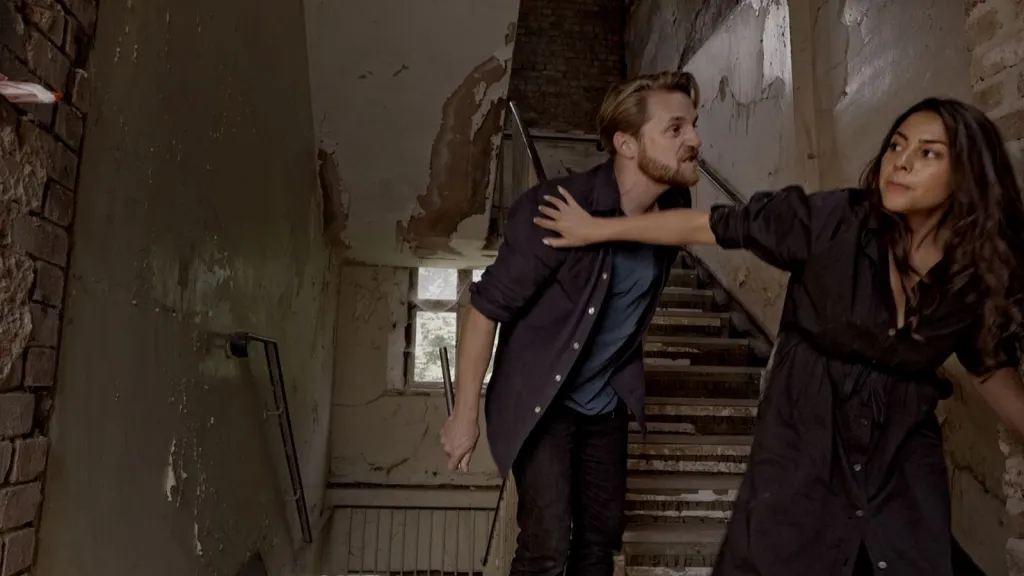
Sophie Fiennes’ immersive film offers privileged access to the experience of making theatre with pioneering practitioners, Declan Donnellan and Nick Ormerod of Cheek By Jowl.
10:30 to 11:00 a.m.
Coffee Break
📌 Centennial Foyer
SAA Book Celebration
📌 Centennial Foyer
Please join us for a Book Celebration, hosted by Kathryn Vomero Santos. This year we are opening this coming April’s Celebration to any books published in the last two years. Click here for a list of the books.
11:00 a.m. to 1:00 p.m.
Workshop
Air & Breath in Macbeth: A Scholar-Practitioner Convergence
📌 Granite B
LEADERS: Theo Black, Cornell University, Christopher Marino, University of North Carolina, Wilmington, and Stephanie Shirilan, Syracuse University
This interactive session on Macbeth investigates the shared air/breath of theatrical embodiment, lensing: air’s mercurial materiality, early modern conceits of pneumatics, actor-training work, language as air-borne agents, and ecological reverberations. This workshop offers participants a guided opportunity to connect accessibly and dynamically with Shakespeare’s text to investigate atmospheric studies of air/breath, exploring ways text re-materializes when “envoiced” from page to stage.
- Sharon J. Harris, Brigham Young University
- David Landreth, University of California, Berkeley
- Genevieve Love, Colorado College
- Joseph Penczak, Troupe of Friends
- Megan Snell, Boston University
- Kelly Christine Steele, The Meadows School, Las Vegas
Seminar
Audio Shakespeare Around the World: Radio, Recordings, Internet
📌 Agate A
LEADER: Michael P. Jensen, Shakespeare Newsletter
Global audio Shakespeare is the most neglected area of Shakespeare performance studies. This seminar is open to all radio, recorded, and internet audio performances. Papers may include any country and language, studies of specific audio performances, audio series, or performances by themes such as navigating race, gender, period, culture, and other issues that inform audio performances. The field is wide open. Let’s fill it.
- Mark Anthony Houlahan, University of Waikato, Hamilton, New Zealand
- Blaire A. Krakowitz, Pennsylvania State University
- Katie Lanning, Wichita State University
- Marianne Montgomery, East Carolina University
- İlker Özçelik, Süleyman Demirel University
- Charlene V. Smith, Cleveland, OH
Seminar
Creative-Critical Engagements with the Renaissance
📌 Mineral A
LEADERS: Kate Bolton Bonnici, Pepperdine University and Colleen Ruth Rosenfeld, Pomona College
This seminar considers practices that blur the boundaries between research and art, practices that affirm creative writing as a valid mode of scholarly inquiry. How might we—as critics—write about early modern literatures using methods that are themselves literary? That is, how might we write critically about the Renaissance without being limited by the (current) scholarly essay or article form? In this seminar, we will explore critical-creative engagements with the subjects of early modernity, occupying the hyphenated, expansive, and varied spaces of scholar-artists.
- Alice Dailey, Villanova University
- Jane Hwang Degenhardt, University of Massachusetts, Amherst
- Doug Eskew, Colorado State University, Pueblo
- Joseph Hirzer Kidney, Stanford University
- Arthur L. Little, Jr., University of California, Los Angeles
- Thomas J. Moretti, Iona University
- Jennifer Waldron, University of Pittsburgh
Seminar
The Many Lives of The Shrew
📌 Quartz A
LEADERS: James J. Marino, Cleveland State University and Elizabeth E. Tavares, University of Alabama
Shakespeare’s The Taming of the Shrew has always been entangled with other versions of its narrative. In many ways, the history of The Shrew is the history of its intertexts. This seminar invites papers on The Taming of the Shrew and its many forerunners, sequels, adaptations, and spinoffs. A range of approaches are welcome, from critical theoretical vantages of trans, gender, and sexuality studies, to affect, translation, and media theory or book, theatre, performance, and film history.
- Allison Duque, University of South Florida
- Catherine Loomis, Rochester, NY
- Arnie Perlstein, Portland, OR
- Kelsey Ridge, Alvernia University
- James A. Rizzi, Canisius University
- Marie H. Roche, University of Massachusetts, Amherst
- Amy L. Tigner, University of Texas, Arlington
- Jessica Tooker, Indiana University, Bloomington
- Sarah Wall-Randell, Wellesley College
Seminar
On Glossing
📌 Mineral E
LEADER: Stephen Spiess, Babson College
What is a textual gloss? What does/should it do? This seminar invites papers “on glossing” from a range of perspectives: editorial, political, historical, theatrical, pedagogical. Participants might anatomize a specific textual gloss; examine the histories, politics, or ethics of glossing (gender, sexuality, race, etc.); assess how digital technologies inform contemporary glossing practices; consider instances of glossing in early modern texts; explore how glosses get used by theater practitioners; and/or introduce strategies for teaching with glosses.
- Marlin E. Blaine, California State University, Fullerton
- Kurt Daw, San Francisco State University
- Joseph Gamble, University of Toledo
- Dalton Greene, University of Maryland
- Eric M. Johnson, George Mason University
- Peter Kirwan, Mary Baldwin University
- James D. Mardock, University of Nevada, Reno
- Jeffrey Masten, Northwestern University
- Andrew Mattison, University of Toledo
- Vanessa L. Rapatz, Ball State University
- Suzanne Tanner, Avila University
- Evelyn Tribble, University of Connecticut
Seminar
Play On: Shakespeare and Video Games
📌 Mineral D
LEADERS: Lowell Duckert, University of Delaware and Christine Hoffmann, West Virginia University
The RSC just announced its first video game, Lili. Reflecting upon a decades-long history of Shakespeare in/as video games, this seminar asks: what does the study of early modernity bring to the discourse of video game studies, and what does the discourse of video game studies bring to the study of early modernity? What can/should this intersectional work look like? We welcome players interested in pedagogy; adaptation, appropriation, and translation; interactivity, reception, and spectatorship.
- Andrew M. Darr, Centralia High School, MO
- Remson Jordan DeJoseph, University of Delaware
- Philip Austin Gilreath, Tulane University
- Elizabeth B. Hunter, Washington University in St. Louis
- Jeffrey Scott Squires, Carnegie Mellon University in Qatar
Seminar
The Poetics of the Page
📌 Mineral C
LEADER: Jessica C. Beckman, Dartmouth College
When does early modern poetics encompass the material text? How can we theorize the relationship between early modern literary experimentation and its material forms? Submissions to this seminar might include essays on poetics and rhetoric, poetry or drama, the history of the book and reading, material culture, aesthetic theory, theories of gender, race, and sexuality, ecocriticism, textual editing, digital editions, and writers beyond Shakespeare.
- Amber C. Bird University of Alabama
- Beatrice Bradley, University of Minnesota, Twin Cities
- Francis X. Connor, Wichita State University
- Nica Giromini Franklin, University of California, Berkeley
- Spencer Grayson, University of Virginia
- Adam G. Hooks, University of Iowa
- Nicholas Jones, Oberlin College
- Jonathan P. Lamb, University of Kansas
- Matthew Ritger, Dartmouth College
- Bailey Sincox, Binghamton University
- Ashley Thomas, Columbia University
Seminar
Power Dressing
📌 Granite C
LEADER: Katharine E. Landers, Illinois State University
This seminar explores the early modern nexus of dress, politics, and women’s writing. Why and how do women writers turn to dress and material identity-making to do political work in the sixteenth and seventeenth centuries? How does gender inform the challenges and possibilities offered by dress? Papers might consider varied forms of “dressing” or explore how the politics of dress intersects with identity-formation in women’s writing via gender, sexuality, race, religion, and more.
- Hannah N. Chambers, Emory University
- Hannah Elizabeth Hicks, University of Notre Dame
- Kay Stanton, California State University, Fullerton
- Valerie Voight, University of Tennessee
Seminar
REED at 50: Prospects and Retrospects
📌 Mineral B
LEADERS: Peter Greenfield, University of Puget Sound and Alan H. Nelson, University of California, Berkeley
In 1976 Records of Early English Drama (REED), of the University of Toronto, received its first funding from the Canada Council. Since 1979 REED has published a total of 27 collections in 36 print volumes, and 7 collections in “born-digital” format. Papers are invited which emulate, reflect upon, profit from, or supplement REED publications. Any research in “Theater History” will be welcome, but authors will be invited to connect their arguments at some point to the REED enterprise.
- Jeeyoung Choi, Purdue University
- Emily Crider, Purdue University
- F. Elizabeth Hart, University of Connecticut, Storrs
- Robert Hornback, Oglethorpe University
- William Ingram, University of Michigan
- Alexandra Ferguson Johnston, University of Toronto
- David Kathman, Chicago, IL
- Siobhan C. Keenan, De Montfort University
- Sally-Beth MacLean, University of Toronto
- Gerit Quealy, New York, NY
- Paul Whitfield White, Purdue University
- Emily F. Winerock, Shakespeare and Dance Project / Point Park University
Seminar
Representation, Politics, and Performance
📌 Mineral G
LEADER: Andrew S. Brown, Dalhousie University
How did the early modern development of representative ideas and institutions transform the English stage—and vice versa? This seminar invites papers on theatrical representation and political representation, with each of these representative forms inviting a range of approaches and definitions. Potential areas of focus include sovereignty; mimesis; individual and collective personhood; domestic and international law; and constructions of race, gender, national identity, and/or social status.
- Rebecca Adusei, King’s College London
- Lisa M. Barksdale-Shaw, Arizona State University
- Emma R. Cohen, Northwestern University
- Delanie R. Harrington Dummit, University of California, Davis
- Benjamin C. Gee, Stanford University
- Joseph Mansky, University of Oklahoma
- Tracey Miller-Tomlinson, New Mexico State University
- Emily Parise, University of California, Irvine
- Emily L. Piersma Sharrett, University of Northwestern, St. Paul
- Artemis Preeshl, Adams State University, Alamosa
- Simone Waller, Reed College
Virtual Workshop
Rescuing Romance
LEADERS: Katharine A. Craik, Oxford Brookes University and Ewan Fernie, Shakespeare Institute, University of Birmingham
This workshop ventures into the spaces between critical and creative practice. We will reflect on the established warrants for literary criticism, and when we should question their authority. We propose it is the limits of what Shakespeare himself could write, as much as his achievements, which propel a leap into full imaginative responsibility. Creative dialogue with the action and poetry of Shakespeare’s romances, through “story criticism,” uncovers coherent, significant and playable new stories, allowing characters to find new life in worlds outside those they were born into.
- Laura E. Levine, New York University
- Philippa M. Sheppard, University of Toronto
Seminar
Rethinking City Comedy
📌 Granite A
LEADERS: Bernadette Myers, Washington University in St. Louis and Robert O. Yates, Wagner College
This seminar invites papers exploring the flexible genre of city comedy. What forms of knowledge does the genre produce or obscure? We welcome papers on plays exemplifying the genre’s conventions and those that innovate it. Topics may include understudied character types, unexplored settings, spatial theories beyond De Certeau and Lefebvre, affect, time, historical precedents, nondramatic intertexts, contemporary adaptations, or implications for historiographies of bodies and environments.
- Matthew Charles Carter, Clayton State University
- Edward Gieskes, University of South Carolina
- Gina Hausknecht, Coe College
- Kimberly A. Huth, California State University, Dominguez Hills
- Bill Kerwin, University of Missouri
- Linc Kesler, University of British Columbia
- Jordan Zajac, O.P., Providence College
Seminar
Shakespeare, AI, and Virtuality
📌 Mineral F
LEADER: Alexa Alice Joubin, George Washington University
How do Shakespearean “worlds” and soliloquies help us understand generative AI’s realms of virtuality and performativity? Techné governs all synchronous and asynchronous communication. Papers may examine pedagogy, AI’s hallucination, and Shakespeare’s depictions of dreams and neurodiversity; compare the anthropomorphizing of AI to animal symbolism in Shakespeare; or take up other corollaries using ecocritical, trans/queer/feminist, posthumanist, postcolonial, and/or critical race theories.
- David J. Baker, University of North Carolina at Chapel Hill
- Nayoung Seo Bishoff, George Washington University
- Laurie Ellinghausen, University of Missouri, Kansas City
- Renuka Gusain, University of North Carolina, Asheville
- Joseph P. Haughey, Northwest Missouri State University
- D. J. Hopkins, San Diego State University
- Emily Rose Nicholls, King’s College London / University of Hong Kong
- Don Rodrigues, Old Dominion University
- Gregory M. Schnitzspahn, Boston, MA
- Lauren Shohet, Villanova University
- W. B. Worthen, Barnard College, Columbia University
Seminar
Whiteness and the Comic
📌 Quartz B
LEADER: Sarah Gray Lesley, University of Chicago
What is the relationship between comedy and whiteness in early modern literature? This seminar unpacks how comedy, as a genre and as a mode, colludes with white worldmaking. While Midsummer Night’s Dream and Comedy of Errors have been central to premodern critical race studies, many comic texts and moments remain to be considered. This seminar seeks papers that probe this critical gap, exploring how Shakespearean and non-Shakespearean texts mobilize the comic to develop fictions of whiteness.
- Joseph Bowling, University of Wisconsin, Madison
- David Sterling Brown, Trinity College
- Elizabeth Dieterich, Carnegie Mellon University
- Ian Smith, University of Southern California
- Lydia Valentine, Shakespeare’s Globe
1:30 to 3:00 p.m.

Annual Luncheon
📌 Centennial D-E
Open to all registrants for the Fifty-Fourth Annual Meeting. Additional guest tickets may be purchased in advance. Member tickets are included in registration envelopes (but may not be available to onsite registrants).
3:30 to 5:00 p.m.

Plenary Panel
Plenary Panel: Editing Race, Sex, and Othello
📌 Centennial F-G
ORGANIZER: Dennis A. Britton, University of British Columbia
CHAIR: Ian Smith, University of Southern California
Dennis A. Britton, University of British Columbia
What’s a Moor, Again?: Race, Nomenclature, and Othello‘s Early Commentors
Patricia Akhimie, Folger Shakespeare Library
Extra-Illustrating Othello
Abdulhamit Arvas, University of Pennsylvania
Walking Barefoot from Venice to Palestine: Rerouting Othello
5:15 to 6:30 p.m.
Reception
Scholars of Color Social
📌 Centennial E
Co-sponsored by the Folger Shakespeare Library
Cash bar and light hors d-oevres.
Open to all registrants and their guests.
6:30 to 8:00 p.m.
Performance
BIOphelia
📌 Centennial H

Theo Black, Cornell University, Amanda Vialva, and Adam Washiyama Shulman, Cornell University
What if Ophelia’s herbs and flowers were given a central place on stage, to share a worldview of regeneration and renewal? What if Ophelia’s seeded potential were to be cultivated, enhanced, and empowered in our shared era of ecological crisis? In this performance, actor Amanda Vialva revives Ophelia’s journey, to evolve Shakespeare’s story beyond the binary of Hamlet’s existential question (you know the one) and look at how we may adapt as part of nature, and better learn to inter-be…
4 April ➤
7:30 to 8:30 a.m.
Yoga
Shakespeare Yoga
📌 Agate C
Anna Riehl Bertolet, RYT-200, Auburn University
Open to all registrants for the Fifty-Fourth Annual Meeting and registered guests.
8:00 a.m. to 12:00 noon
Information
📌 Centennial Foyer
Book Exhibits
📌 Centennial A
Browse recent publications and meet informally with representatives from several presses.
9:00 to 10:30 a.m.
Panel
Makers, Making and the Made in Early Modern Theatrical Culture and Its Reproductions
📌 Centennial F
ORGANIZER: Bridget Mary Escolme, Queen Mary University of London
CHAIR: Drew Daniel, Johns Hopkins University
Bridget Mary Escolme, Queen Mary University of London
Re-making the Made: Craft, Value and Nostalgias in Shakespeare Re-production
Natasha Korda, Wesleyan University
“Peculiar Extensions”: Footwork, Footwear, and the Footprint of Early Modern Performance
James Loxley, University of Edinburgh
The Phenomenology of Labour and the Early Modern Stage
Panel
Mapping Spatial Habits in Early Modernity
📌 Centennial G
ORGANIZER: Gavin Hollis, Hunter College, CUNY
CHAIR: Laura E. Kolb, Baruch College, CUNY
Gavin Hollis, Hunter College, CUNY
Mappery, or The Joy of Maps
Laura Williamson, St. Mary’s College, Notre Dame
Mobility, Measurement, and The English Travel Guide
Seth Stewart Williams, Barnard College, Columbia University
Choreography as Chorography: Dancing Maps on Stage and Street
10:00 a.m. to 12:00 noon
Digital Exhibit
Early Modern England Encyclopedia
📌 Centennial Foyer
EXHIBITOR: Kate McPherson, Utah Valley University
The Early Modern England Encyclopedia (EMEE) offers an open-source, peer-reviewed set of articles that offer a full revision and broadening of content, navigation, and sources inspired by Shakespeare’s Life and Times. With sections on Theater, History, and Culture, EMEE offers a free resource for students, faculty, and the public. Each updated article offers a high-quality image and vetted print and online sources. The Culture section is published currently, with Theatre expected in September 2026 and History by December 2026.
▶️ Demo Video
Digital Exhibit
Open-Access AI & Textbook: Screening Shakespeare
📌 Centennial Foyer
EXHIBITOR: Alexa Alice Joubin, George Washington University
Screening Shakespeare is a Gold Open Access, Quality Matters certified, media-rich textbook with a resident multilingual AI that draws answers only from the textbook and offers responses that are adapted to the users’ levels. It covers key concepts such as mise-en-scène, cinematography, sound and music, and film theory within the context of Shakespeare studies. No login required. Watch the demo video to learn more.
▶️ Demo Video
Digital Exhibit
Points Like A Man: The Shakespearean Breeches Performance Catalogue, 1660-1900
📌 Centennial Foyer
EXHIBITOR: Alexandra E. LaGrand, Texas A&M University
Points Like A Man curates records of genderfluid Shakespearean breeches performances by actresses from 1660 to 1900 to demonstrate the immense frequency wherein these performances took place and to consider how they helped shape Shakespeare’s theatrical afterlives. Database features include performance records, an interactive theatre map, and a searchable Actress Index.
Digital Exhibit
Shakespeare’s Theaterscape
📌 Centennial Foyer
Shakespeare’s Theaterscape (NEH-Purdue University funded, 3 years, $250,000) introduces an innovative new scholarly website featuring spatially accurate and topographically detailed ArcGIS models of four London playhouse districts, as well as searchable, relational databases of places, people, and events, freshly edited theatre-related archival records, and new interpretive commentary.
Digital Exhibit
We’ll Hear a Play: Early Modern Performances Online
📌 Centennial Foyer
EXHIBITOR: Miranda Hannasch, University of Nevada, Las Vegas
We live in a golden age for digital theatre, but the high price of subscription services can render many options impractical for student use. We’ll Hear a Play seeks to broaden the accessibility of digital theatre by providing a searchable database of free online performances of early modern plays. Users can search by title, author, or original performance date.
10:30 to 11:00 a.m.
Coffee Break
📌 Centennial Foyer
11:00 a.m. to 12:30 p.m.
Plenary Panel
NextGenPlen
📌 Centennial F-G
ORGANIZERS: Members of the NextGenPlen Committee
CHAIR: Wendy Beth Hyman, Oberlin College
Chelsea Lee, University of California, Irvine
Effigy Executions, Displaced Violence, and the Early Modern Stage
Anouska Lester, University of York
“No positive proof whatever”: The Authenticity of “Shakespeare’s” Seal Ring
Matthew Walsh, University of Massachusetts, Amherst
Broken Vows and Faithless Domesticates: Relitigating the Onstage Cat in William Sampson’s The Vow Breaker (1636)
1:00 to 2:00 p.m.
Professionalization
CV Review and Career Mentoring
📌 Agate C
David Sterling Brown, Trinity College, Emily Parise, University of California, Irvine, Kathryn Schubert, University of California, Irvine, and Eunwoo Yoo, University of California, Santa Barbara
Are you a graduate student or early career researcher who is interested in having your CV reviewed? The SAA Graduate Committee and Dr. David Sterling Brown are excited to offer CV Review & Career Mentoring sessions. This will be an opportunity for you to receive feedback on your CV from advanced scholars and professionals (CV reviewers) who will be available in person for individual 15-minute meetings. They will assess your CV and offer guidance catered to your specific career goals. If you have any questions, please contact us at saagrads@gmail.com.
Meeting
The Guild of Queer Early Modernists Meeting
📌 Mineral E
Join GQEM for our second annual meeting as we come together to build a community for queer early modernists and our allies. Open to all registrants and their registered guests.
2:30 to 4:00 p.m.
Panel
Shakespeare and Neurodiversity
📌 Centennial F
ORGANIZERS: Sheila T. Cavanagh, Emory University and Bradley J. Irish, Arizona State University
CHAIR: Sheila T. Cavanagh, Emory University
Bradley J. Irish, Arizona State University
Thinking, Feeling, Sensing: Shakespearean Minds and Neurodiversity
Sonya Freeman Loftis, Morehouse College
Allistic Shakespeare
Deyasini Dasgupta, Washington State University
“Keep me in temper”: Sensory Capacity, Normative Nationality, and Racialized Gender
Panel
Theatre History in Dialogue
📌 Centennial G
ORGANIZERS: Clare McManus, Northumbria University and Lucy Munro, King’s College London
CHAIR: Lucy Munro, King’s College London
Misha Teramura, University of Toronto
Ink, Paper, Glue, Pins: Manuscript Playbooks as Theatrical Objects
Jonathan Powell, University of Edinburgh
Coverture, Sara Allen, and the Theatre in Shoreditch: A (Theatre) History of Alienation
Elisa Oh, Howard University
Choreographies of Bad Service: Resistant Wives and Servants in The Taming of the Shrew
Lucy Holehouse, Royal Holloway, University of London
Anatomised Gender: Cis-Centricity in the King’s Men’s Repertory
David McInnis, University of Melbourne
Lost Repertorial Contexts: Theatre History and Textual Editing
4:30 to 6:30 p.m.
Seminar
Ethical Plurality on the Early Modern Stage
📌 Quartz A
LEADERS: Christopher Crosbie, North Carolina State University and Anita Gilman Sherman, American University
This seminar considers how the early modern stage made use of, mediated between, and reconceptualized different, even rival, ethical and religious traditions. How did multiple ways of knowing or believing find expression in the theater and to what end? What methodologies help us trace variant lineages of thought shaping early modern plays? How did playwrights negotiate the erudite and vernacular, parochial and syncretic, or partisan and ecumenical in their representations of ethical reasoning?
- John C. Higgins, University of Nevada, Reno
- Jim Kearney, University of California, Santa Barbara
- Jonathan Sircy, Southern Wesleyan University
- Richard Allen Strier, University of Chicago
Seminar
Labor and Early Modern Literature
📌 Granite C
LEADERS: Megan Heffernan, DePaul University and Julia Schleck, Colorado State University
This seminar invites papers that explore the relationship between literary and non-literary labor historically and/or today. Papers can focus on the material history of literary production, whether on the stage or in the printing house, or the depiction of such relationships within literary works. We welcome papers that draw early modern labor into productive dialogue with contemporary labor conditions within and beyond the academy.
- Emily Coyle, Rutgers University, Newark
- Joel M. Dodson, Southern Connecticut State University
- Anders Greene-Crow, New York, NY
- Roze F. Hentschell, Colorado State University
- Lindsey L. Jones, Texas A&M University
- Juan Lamata, California State University, Los Angeles
- Tanya Pollard, Brooklyn College, CUNY
- Rebecca M. Quoss-Moore, University of Central Oklahoma
- Charlotte Thurston, Graduate Center, CUNY
- Molly G. Yarn, Birmingham, AL
Seminar
New World Theatricality
📌 Agate B
LEADERS: Andrew Bozio, Skidmore College and Caro Pirri, University of Pittsburgh
This seminar explores the formal imprint of conquest on early modern theatricality. How does theatricality, not simply as a medium but as a mode, give us new interpretive rubrics for reading the histories and legacies of conquest history? Papers might explore this question not simply in Shakespeare’s dramas or on the English stage, but across the early modern media landscape—from entertainments, masques, and emblems to representations of Indigenous performance and ritual.
- Robin Alfriend Kello, Seton Hall University
- Alexander Paulsson Lash, National Taiwan University
- Tonhi Lee, Tufts University
- Vincent Mennella, Southern Methodist University
- George N. Perez, University of Pennsylvania
- Sarah Snee, Duquesne University
- Jennie G. Youssef, Graduate Center, CUNY
Seminar
Overwhelmed
📌 Mineral D
LEADERS: Gerard Passannante, University of Maryland, College Park and Susanne L. Wofford, New York University
How does Shakespeare dramatize—in different genres, in plays or lyric poetry—being overwhelmed by nature, by politics, by disaster or by thoughts—floods, fires, shipwrecks, wars, all overwhelm, but so do obsessions, fears, or passions. We will look at political and ecological overwhelm and at the boundary between external and psychic experience. We will ask if and when these experiences illuminate the ties for the characters, players or audience between the self and the political order.
- Stephanie Chamberlain, Southeast Missouri State University
- Kathryn A. Crim, University of Chicago
- Drew Daniel, Johns Hopkins University
- Jean E. Feerick, John Carroll University
- Cora Virginia Fox, Arizona State University
- James A. Knapp, Loyola University Chicago
- Jonathan Koch, Pepperdine University
- Ross Lerner, Occidental College
- Naomi C. Liebler, Montclair State University
- Morgan Taylor Farina-Shaw, Syracuse University
- James Sutton, Florida International University
- Penelope Meyers Usher, Barnard College
Seminar
Shakespeare and Nonsense
📌 Granite B
LEADER: Adam Zucker, University of Massachusetts, Amherst
The experience of Shakespeare’s plays and poetry on the page and in performance often occurs at the very edges of sensible meaning. This may be an intentional aspect of scripted language, an effect of manuscript transmission, or a simple result of the passage of time as language and reference become increasingly obscure to students and audiences; sometimes, however, it is the result of systemically blocked access to language for certain characters, critics, or readers. This seminar provides a forum to consider the many facets and outcomes of Shakespearean nonsense in critical, pedagogical, historical, textual, and theatrical contexts, both as it appears in plays and poems, and as it has emerged in relation to them over time.
- Katie Adkison, Texas A&M University
- RaNelle Kathleen Bradley, New York University
- Lars Engle, University of Tulsa
- William Germano, Cooper Union
- Chris Klippenstein, University of Toronto
- Mary Odbert, Fort Collins, CO
Seminar
Shakespeare’s Sentences
📌 Mineral G
LEADERS: Shankar Raman, Massachusetts Institute of Technology and Travis D. Williams, University of Rhode Island
This seminar seeks contributions that explore Shakespeare and other early modern writers at the level of the sentence, including concepts of definition, structure, prose style, relation to poetic form, prescriptive and descriptive grammars, the period, sententiae, and the commonplace. We especially welcome experimental, exploratory, and emergent work, hoping to emphasize collaborative development of ideas and methods.
- Lara Dodds, Mississippi State University
- Darlene Farabee, University of South Dakota
- Lynne Magnusson, University of Toronto
- Nick Moschovakis, Bethesda, MD
- Stephanie Pietros, College of Mount St. Vincent
- Tracey Sedinger, University of Northern Colorado
- David Vaughan, Northwestern Oklahoma State University
Seminar
The Sonic Laboratory of the Renaissance Theater
📌 Agate A
LEADERS: Sarah F. Williams, University of South Carolina and Jennifer Linhart Wood, George Mason University
This seminar will explore auditory experiments staged in the sonic laboratory of the early modern theater: noisy audiences, music, sound effects, and even entire soundscapes. Questions for discussion include: What physical effects do theatrical sounds create in listening bodies? What were audiences guided to hear? What did it sound like when things went wrong? How are sounds marshalled in performance(s) of gender, racial, and cultural otherness, and/or other and intersectional forms of identity?
- Linda Phyllis Austern, Northwestern University
- Mayra Cortes, University of California, Los Angeles
- Yujin Jang, University of Pittsburgh
- Joseph Nelson, College of the Holy Cross
- Joseph M. Ortiz, University of Texas, El Paso
- Jeremy L. Smith, University of Colorado, Boulder
Seminar
Speaking the Speech
📌 Quartz B
LEADER: Matthew Hunter, Texas Tech University
While Shakespeare’s dramatic language has long been an object of scholarly interest, its status as speech has tended to receive less attention. This is a seminar about the performance, the value, and the ethics of speech in Shakespeare’s plays. It invites scholars from a wide range of intellectual affiliations—from performance history and theory, to poetics and aesthetics, to histories of the book, to disability studies, to ordinary language philosophy and sociological and anthropological frameworks—to think anew about what it means to speak in Shakespeare’s plays.
- Cristina León Alfar, Hunter College, CUNY
- Jennifer Birkett, Independent Scholar
- James Kuzner, Brown University
- Scott Oldenburg, Tulane University
Workshop
Teaching Early Modern Gender, Sexuality, and Care of the Body
📌 Mineral A
LEADERS: Karen Sawyer Marsalek, St. Olaf College and Nancy L. Simpson-Younger, St. Olaf College
Participants will workshop lesson plans and assignments that cover early modern perspectives on care of the body, gender, and sexuality. Using a set of shared primary texts, including Thomas Cogan’s Haven of Health and recipe collections, we will co-create a range of course modules that integrate early modern literature and therapeutic discourse. We will discuss how to customize these materials for courses at different levels and with different disciplinary focuses.
- Anna Riehl Bertolet, Auburn University
- Jennifer Forsyth, Kutztown University
- James Yukiko Mulder, Bentley University
- Hillary M. Nunn, University of Akron
- Katherine W. Scheil, University of Minnesota
- Kathryn Schubert, University of California, Irvine
- Anna-Rose Katerina Shack, University of Freiburg
Seminar
Theatrical and Environmental Encounters
📌 Granite A
LEADERS: Gretchen Minton, Montana State University and Chloe K. Preedy, University of Exeter
Skyscapes, landscapes, flora, birds, and insects can unexpectedly intersect with and participate in theatrical performances. Productions might also involve nonhuman animal performers, use water or fire effects, or feature natural materials and items (e.g. flowers). We invite papers that consider the ecological significance of scripted or unscripted encounters between the more-than-human environment and the plays of Shakespeare and his contemporaries in early modern or modern theatrical contexts.
- Katherine Steele Brokaw, University of Texas, Austin
- Christina Cawdery, University of Hawai‘i, Mānoa
- Hillary Eklund, Grinnell College
- Nathan Powell Keckley, Syracuse University
- Simon Smith, Shakespeare Institute, University of Birmingham
- Jeff Theis, Salem State University
- William Floyd Wolfgang, Stevenson University
Seminar
Unearthing
📌 Mineral C
LEADERS: Kristen Abbott Bennett, Framingham State University and Emily Rowe, Queen Mary University London
This seminar explores early modern literature’s engagement with subterranean ecosystems. How do writers imagine unearthing, extraction, and decay in ways that speak to ecological, economic, and socio-political concerns? How do literary texts unearth the entanglements of material wealth and environmental consequence? Our conversations aim to examine imaginative possibilities that materials, objects, plants, and creatures beneath the surface of the earth elicit.
- Mira ‘Assaf, Butler University
- Frederika Bain, Honolulu, Hawai‘i
- Shannon J. Garner, Salt Lake City, UT
- Molly Hand, Florida State University
- Miranda Hannasch, University of Nevada, Las Vegas
- Inhoo Kim, Texas A&M University
- Ian F. MacInnes, Albion College
- Kirsten Schuhmacher, University of Connecticut
- Naya Tsentourou, University of Exeter, UK
Seminar
White Sophistry and Epistemicide in Shakespeare Then and Now
📌 Mineral B
LEADERS: Nora Galland, University of Bretagne Occidentale and Katherine Gillen, Texas A&M University, San Antonio
This seminar explores connections among rhetorical, epistemic, and material white violence in Shakespeare. If racial difference is a social construct, it is also a product of white sophistry designed to reinforce whiteness at the expense of other racialized groups. We invite papers on the ways in which the less tangible aspects of whiteness interact with the material violence of racism and genocide. How does Shakespeare foster, reinforce, or disrupt white ways of knowing, speaking, and seeing?
- Laurel N. Billings, University of Michigan
- Fen A. Bischoff, University of California, Los Angeles
- Patricia A. Cahill, Emory University
- Ryan Campagna, University of Chicago
- Eric L. De Barros, American University of Sharjah
- Angelina Del Balzo, Utah Valley University
- Laura DeLuca, Carnegie Mellon University
- Kyle M. Labe, University of Connecticut
- Joyce G. MacDonald, University of Kentucky
- Maya Mathur, University of Mary Washington
- Jesus A. Montaño, Baylor University
- Bradley D. Ryner, Arizona State University
- Anna-Claire Simpson, Bard Microcollege, Asnuntuck Community College, Clemente Course in the Humanities
Seminar
“A Whole Theater of Others”: Presenting and Representing the Playgoers in Shakespeare’s Playhouses
📌 Mineral F
LEADERS: Amy Rodgers, Mount Holyoke College and William N. West, Northwestern University
Shakespeare’s plays were present to playgoers in ways that we rarely encounter, and they thickly re-present experiences associated with playgoing. We invite papers on early modern playgoers’ experiences—how they understood themselves, why they went to plays and what they got out of them. We welcome accounts of early performances, experiments with original practices, speculations about perspectives that elude reconstruction—anything that asks “How is it possible then to think of the audience?”
- Sheila Coursey, Saint Louis University
- Claire J. Eager, College of Wooster
- Jennifer A. Low, Florida Atlantic University
- Lynsey McCulloch, Royal Shakespeare Company
- Lucy Munro, King’s College London
- Nancy Selleck, University of Massachusetts, Lowell
- Stephen M. Wisker, Wesleyan College
6:30 to 8:30 p.m.
Cash Bar
ACMRS Cash Bar
📌 Centennial Foyer
Sponsored by ACMRS
Celebrating authors and contributors to new ACMRS titles. All members are welcome.
7:00 to 10:00 p.m.
Film Screening
The Tempest
📌 Centennial F
Q&A with director Garrett Replogle led by Melissa Croteau to follow screening.

“Garrett Replogle’s The Tempest is in his own words ‘a love letter to Shakespeare himself, the Mojave desert, and Sci-Fi, certainly unlike any Shakespeare adaptation you have seen before.’ Star Trek meets Shakespeare and a spaceship captain is marooned on a desert planet with his daughter, with Ariel, a multi-capable android ‘assistant’ and with a resentful snake-skinned spawn of a witch, Caliban.” (Ren Zelen, review for Horror DNA, July 2025)
10:00 p.m. to 1:00 a.m.
Dance
The Malone Society Dance
📌 Centennial E
The dance is free to all registrants and their guests thanks to the generosity of the Malone Society.
The Malone Society invites all registrants of #Shax2026 to join the dance and join its ranks: malonesociety.com. The Malone Society publishes editions of early printed and manuscript texts of plays, plus collections of documentary material relating to the performance and reception of early drama.
Practicum
Articles in Progress
LEADERS: Hillary Eklund Grinnell College and Rebecca Totaro Florida Gulf Coast University
The practicum supports first time authors preparing their articles for submission to academic journals. Authors will submit an abstract and brief biography and be paired with a senior scholar with editorial expertise who will read a draft of the article and offer feedback at an informal meeting during the conference.






 The Malone Society publishes editions of early printed and manuscript texts of plays, plus collections of documentary material relating to the performance and reception of early drama. In addition to the annual volumes distributed to members, we support scholarship through fellowships and research grants, prizes, symposia and a range of bibliographically inspired t-shirts. To join the society, please go to our website: malonesociety.com.














Participants of the 54th Annual Meeting
A
- Melissa D. Aaron, Cal Poly Pomona
- Ifeoluwa Aboluwade, University of Würzburg, Germany
- Stella Achilleos, University of Cyprus
- Katie Adkison, Texas A&M University
- Rebecca Adusei, King’s College London
- Patricia Akhimie, Folger Shakespeare Library
- Jahidul Alam, Jackson State University
- Michael Andrew Albright, Southwest Minnesota State University
- Lucie Alden, Georgetown University
- Cristina León Alfar, Hunter College, CUNY
- Gemma Kate Allred, Université de Neuchâtel
- Bridget B. Anderson, University of Wisconsin, Madison
- Susan L. Anderson, Mary Baldwin University
- Douglas H. Arrell, University of Winnipeg
- Charlotte Artese, Agnes Scott College
- Abdulhamit Arvas, University of Pennsylvania
- Ved Dutt Arya, Ashoka University, Delhi-NCR, India
- Mira Assaf, Butler University
- Linda Phyllis Austern, Northwestern University
- Rebecca Ann Bach, University of Alabama, Birmingham
B
- Precious Bailey, University of Alabama
- Frederika Bain, Honolulu, Hawai‘i
- David J. Baker, University of North Carolina at Chapel Hill
- Jonathan Baldo, Eastman School of Music, University of Rochester
- Ariane M. Balizet, Texas Christian University
- Vanessa Rodrigues Barcelos, University of Miami
- Lisa M. Barksdale-Shaw, Arizona State University
- Olivia Ryan Barry, University of Massachusetts Amherst
- Bridget Marie Bartlett, Swansea University
- Mark Bayer, University of Texas, San Antonio
- Jessica C. Beckman, Dartmouth College
- Frederick Bengtsson, University of Kentucky
- Kristen Abbott Bennett, Framingham State University
- Sean M. Benson, University of Mary Hardin-Baylor
- James E. Berg, Middlebury College
- Anna Riehl Bertolet, Auburn University
- Roya Biggie, Knox College
- Valerie Billing, Central College
- Laurel N. Billings, University of Michigan
- Amber C. Bird, University of Alabama
- Jennifer Birkett, Independent Scholar
- Fen A. Bischoff, University of California, Los Angeles
- Nayoung Seo Bishoff, George Washington University
- Jennifer Black, Boise State University
- Theo Black, Cornell University
- Victoria Bladen, University of Queensland
- Marlin E. Blaine, California State University, Fullerton
- Gabriel Bloomfield, Bates College
- Benjamin Blyth, University of Calgary
- Erika M. Boeckeler, Northeastern University
- Liesl Claire Bolin, Baltimore, MD
- Kate Bolton Bonnici, Pepperdine University
- Devon Boorman, Academie Duello Centre for Swordplay
- Andrew Falconer Borgars, Digital Theatre+
- Keith Botelho, Kennesaw State University
- Effie Botonaki, Aristotle University of Thessaloniki, Greece
- Mathieu D. S. Bouchard, John Abbott College
- Lara Bovilsky, University of Oregon
- Joseph Bowling, University of Wisconsin, Madison
- Andrew Bozio, Skidmore College
- Beatrice Bradley, University of Minnesota, Twin Cities
- RaNelle Kathleen Bradley, New York University
- Sophie Braker, Colorado Spring, CO
- Heidi Brayman, University of California, Riverside
- Hannah Bredar, Anne Arundel Community College
- Sarah Brew, Weber State University
- Dennis A. Britton, University of British Columbia
- Benjamin Broadribb, London, UK
- Katherine Steele Brokaw, University of Texas, Austin
- Andrew S. Brown, Dalhousie University
- David Sterling Brown, Trinity College
- Piers Brown, Kenyon College
- Emily D. Bryan, Sacred Heart University
- Ashley Buchanan, Folger Shakespeare Library
- Thea Buckley, Belfast, Northern Ireland
- Stephen M. Buhler, University of Nebraska, Lincoln
- Elizabeth Burow-Flak, Valparaiso University
- Jonathan Burton, Whittier College
- Katarzyna Burzyńska, Adam Mickiewicz University
- Rebecca Bushnell, University of Pennsylvania
- Rachel Byrd, Southern Adventist University
C
- Patricia A. Cahill, Emory University
- Bianca F. C. Calabresi, Columbia University
- Ryan Campagna, University of Chicago
- Zeidy Zady Canales, Universidad Nacional Autónoma de México (UNAM)
- Cate Capplemann, Shakespeare at Notre Dame
- Erika Lyn Carbonara, Kalamazoo College
- Kim Howard Carrell, Worcester State University
- Matthew Charles Carter, Clayton State University
- Sheila T. Cavanagh, Emory University
- Douglas Farquhar Cavers, University of Southern California
- Christina Cawdery, University of Hawai‘i, Mānoa
- Juan F. Cerdá, Universidad de Murcia
- Darryl Chalk, University of Southern Queensland
- Stephanie Chamberlain, Southeast Missouri State University
- Hannah N. Chambers, Emory University
- Zainab Cheema, Florida Gulf Coast University
- Dongqiao Chen, Beijing, China
- Jeeyoung Choi, Purdue University
- Yoojung Chun, Harvard University
- Madeline Cisneros, University of Miami
- Katharine Cleland, Virginia Tech
- Catherine R. Clifford, Hastings College
- Emma R. Cohen, Northwestern University
- Stephen Cohen, Central Connecticut State University
- Walter I. Cohen, University of Michigan
- John Colley, University of Cambridge
- Rob Conkie, University of North Carolina, Charlotte
- Francis X. Connor, Wichita State University
- Megan L. Cook, Colby College
- Kerry N. Cooke, Mary Baldwin University
- Amy Cooper, US Air Force Academy
- Kathryn M. Corah, SUNY Albany
- Charmaine Cordero, Claremont Graduate University
- Mayra Cortes, University of California, Los Angeles
- Sheila Coursey, Saint Louis University
- Emily Coyle, Rutgers University, Newark
- Heidi Craig, University of Toronto
- Katharine A. Craik, Oxford Brookes University
- Loren Cressler, University of Texas, Austin
- Emily Crider, Purdue University
- Kathryn A. Crim, University of Chicago
- Christopher Crosbie, North Carolina State University
- Melissa Croteau, California Baptist University
- Taylor Claire Culbert, SUNY New Paltz
- Kaitlyn Culliton, Texas A&M International University
D
- Ambereen Dadabhoy, Harvey Mudd College
- Alice Dailey, Villanova University
- Drew Daniel, Johns Hopkins University
- Andrew M. Darr, Centralia High School, MO
- Deyasini Dasgupta, Washington State University
- Kurt Daw, San Francisco State University
- Claire Dawkins, Stanford University Online High School
- Eric L. De Barros, American University of Sharjah
- Jane Hwang Degenhardt, University of Massachusetts, Amherst
- Remson Jordan DeJoseph, University of Delaware
- Angelina Del Balzo, Utah Valley University
- Carla Della Gatta, University of Maryland
- Laura DeLuca, Carnegie Mellon University
- Adhaar Noor Desai, Bard College
- Allison K. Deutermann, Baruch College, CUNY
- Nicholas Devlin, The Gallatin School, NYU
- Amrita Dhar, University of California, San Diego
- Amanda Di Ponio, Huron University College
- Elizabeth Dieterich, Carnegie Mellon University
- Craig Dionne, Eastern Michigan University
- Lara Dodds, Mississippi State University
- Joel M. Dodson, Southern Connecticut State University
- Kate Doubler, University of South Florida
- Michelle M. Dowd, University of Alabama
- Lowell Duckert, University of Delaware
- Mark Dudgeon, Arden Shakespeare
- Holly E. Dugan, George Washington University
- Delanie R. Harrington Dummit, University of California, Davis
- Susan M. Dunn-Hensley, Wheaton College
- Allison Duque, University of South Florida
- Patrick Durdel, University of Oxford
E
- Claire J. Eager, College of Wooster
- Heather C. Easterling, Gonzaga University
- Rachel Eisendrath, Barnard College, Columbia University
- Hillary Eklund, Grinnell College
- Laurie Ellinghausen, University of Missouri, Kansas City
- Daniel Emerson, University of Alabama
- Lars Engle, University of Tulsa
- Michelle Ephraim, Worcester Polytechnic Institute
- Bridget Mary Escolme, Queen Mary University of London
- Doug Eskew, Colorado State University, Pueblo
- Ruben Espinosa, Arizona State University
- Laura Estill, St. Francis Xavier University
- Donna Evan-Kesef, Stanford University
F
- Darlene Farabee, University of South Dakota
- Alan B. Farmer, Ohio State University
- Mark D. Farnsworth, Brigham Young University, Idaho
- Ryan Derek Farrar, Collin College
- Valerie M. Fazel, Arizona State University
- Jennifer Feather, University of North Carolina, Greensboro
- Jean E. Feerick, John Carroll University
- Ewan Fernie, Shakespeare Institute, University of Birmingham
- Melody Fetske, Shakespeare Association of America
- Gina Filo, Utah State University
- Jennifer Flaherty, Georgia College
- Diego Gregorio Fleitas, University of Mississippi
- Mary Floyd-Wilson, University of North Carolina, Chapel Hill
- Gregory A. Foran, Nazareth University
- Jemma Louise Forster, Cambridge, UK
- Jennifer Forsyth, Kutztown University
- Cora Virginia Fox, Arizona State University
- Liz Fox, University of Massachusetts, Amherst
- Timothy Francisco, Youngstown State University
- Nica Giromini Franklin, University of California, Berkeley
- Anne Freeman, University of Mississippi
- Paul Adrian Fried, Northfield, MN
- Michael D. Friedman, University of Scranton
- Susan C. Frye, University of Wyoming
- Ciara J. Fulton, University at Buffalo, SUNY
G
- Evelyn Gajowski, University of Nevada, Las Vegas
- Nora Galland, University of Bretagne Occidentale
- Joseph Gamble, University of Toledo
- Jonas Gardsby, University of Wisconsin, Green Bay
- Shannon J. Garner, Salt Lake City, UT
- Benjamin C. Gee, Stanford University
- William Germano, Cooper Union
- Loreen L. Giese, Ohio University
- Edward Gieskes, University of South Carolina
- Katherine Gillen, Texas A&M University, San Antonio
- Philip Austin Gilreath, Tulane University
- Kelley Katherine Glasgow, Boston College
- Emily Glider, Bilkent University, Ankara, Türkiye
- Marinela Golemi, Northern Arizona University
- José Manuel González, Universidad de Alicante
- Katharine Goodland, College of Staten Island, CUNY
- Jade Gorgan, Arden Shakespeare
- Ani Govjian, University of Pennsylvania
- Kyle Grady, University of California, Irvine
- E. Rose Grant, University of Toronto
- Spencer Grayson, University of Virginia
- Douglas E. Green, Augsburg University
- Dalton Edward Greene, University of Maryland
- Anders Greene-Crow, New York, NY
- Peter Greenfield, University of Puget Sound
- Brent Griffin, Resurgens Theatre Company / Georgia State University
- Eric J. Griffin, Millsaps College
- Huw Griffiths, University of Sydney
- Perry D. Guevara, Georgia Institute of Technology
- Renuka Gusain, University of North Carolina, Asheville
- Emiliano Gutierrez-Popoca, Georgia Institute of Technology
H
- Jess Hamlet, Alvernia University
- Elisha Hamlin, University of California, Davis
- Molly Hand, Florida State University
- Miranda Hannasch, University of Nevada, Las Vegas
- Matthew C. Hansen, Boise State University
- Brian Harries, Concordia University
- Patrick Aaron Harris, University of South Carolina
- Sharon J. Harris, Brigham Young University
- Matthew P. Harrison, West Texas A&M University
- F. Elizabeth Hart, University of Connecticut, Storrs
- David W. Hartwig, Weber State University
- Joseph P. Haughey, Northwest Missouri State University
- Gina Hausknecht, Coe College
- Pierre Hecker, Carleton College
- Donald K Hedrick, Kansas State University
- Megan Heffernan, DePaul University
- Anna Hegland, Carthage College
- Christa Hegland
- Joshua R. Held, Southeastern Oklahoma State University
- Nic Helms, Independent Scholar
- Diana E. Henderson, Massachusetts Institute of Technology
- Roze F. Hentschell, Colorado State University
- Hannah Elizabeth Hicks, University of Notre Dame
- Derrick Higginbotham, University of Hawai‘i, Mānoa
- John C. Higgins, University of Nevada, Reno
- Sarah Higinbotham, Emory University, Oxford College
- Benjamin Hilb, Francis Marion University
- Michael J. Hirrel, Arlington, VA
- Rebecca Hixon, St. Bonaventure University
- Christine Hoffmann, West Virginia University
- Jason C. Hogue, Texas A&M University, Kingsville
- Lucy Holehouse, Royal Holloway, University of London
- Jennifer R. Holl, Rhode Island College
- Peter Holland, University of Notre Dame
- Gavin Hollis, Hunter College, CUNY
- Adam G. Hooks, University of Iowa
- Jonathan Hope, ACMRS Press
- D. J. Hopkins, San Diego State University
- Jackie Hopkins
- Robert Hornback, Oglethorpe University
- Mark Anthony Houlahan, University of Waikato
- Jean E. Howard, Columbia University
- Lizzie Conrad Hughes, Shake-Scene Shakespeare
- Joanna Huh, University of Cincinnati
- Elizabeth B. Hunter, Washington University in St. Louis
- Matthew Hunter, Texas Tech University
- Lucy Barbara Hurst, University of Bristol
- Kimberly A. Huth, California State University, Dominguez Hills
- Wendy Beth Hyman, Oberlin College
- Trina Hyun, University at Buffalo, SUNY
I
- William Ingram, University of Michigan
- Bradley J. Irish, Arizona State University
- Jordan Ivie, Vanderbilt University
J
- Scott Jackson, University of Notre Dame
- Miriam E. Jacobson, University of Georgia
- Yujin Jang, University of Pittsburgh
- Benjamin Jeffery, University of Chicago
- Liesl Elphie Jensen, Shakespeare Institute, University of Birmingham
- Michael P. Jensen, Shakespeare Newsletter
- Phebe Jensen, Utah State University
- Kristine Johanson, Universiteit van Amsterdam
- Eric M. Johnson, George Mason University
- Kameron Johnson, Sorbonne Université
- Melissa M. Johnson, Lyon College
- Alexandra Ferguson Johnston, University of Toronto
- Keith Jones, University of Northwestern, Saint Paul
- Lindsey L. Jones, Texas A&M University
- Nicholas Jones, Oberlin College
- Oliver Jones, University of York, UK
- Ollie Jones, University of York
- Alexa Alice Joubin, George Washington University
K
- Mark Beatrice Kaethler, Medicine Hat College
- Cheryle Kapsak, The Scholar’s Choice
- Christine Marie Kasparian, Bennington College
- David Kathman, Chicago, IL
- Jim Kearney, University of California, Santa Barbara
- Nathan Powell Keckley, Syracuse University
- Siobhan C. Keenan, De Montfort University
- Robin Alfriend Kello, Seton Hall University
- Erin E. Kelly, University of Victoria
- Erin K. Kelly, California State University, Chico
- Sawyer K. Kemp, Queens College, CUNY
- Lindsay Adams Kennedy, Benedictine College
- Bill Kerwin, University of Missouri
- Linc Kesler, University of British Columbia
- Joseph Hirzer Kidney, Stanford University
- Inhoo Kim, Texas A&M University
- Peter Kirwan, Mary Baldwin University
- András Kiséry, City College of New York, CUNY
- Chris Klippenstein, University of Toronto
- James A. Knapp, Loyola University Chicago
- Katherine I. Knowles, University of Kansas
- Jonathan Koch, Pepperdine University
- Laura E. Kolb, Baruch College, CUNY
- Laura Koleva, Texas Tech University
- Elizabeth Zeman Kolkovich, Ohio State University
- Natasha Korda, Wesleyan University
- Hannah Korell, University of Wisconsin, Platteville
- Anna Kowalcze-Pawlik, University of Lodz
- Matthew Kozusko, Ursinus College
- Jennifer Dawson Kraemer, University of North Texas
- Blaire A. Krakowitz, Pennsylvania State University
- James Kuzner, Brown University
L
- Kyle M. Labe, University of Connecticut
- Alexandra E. LaGrand, Texas A&M University
- Juan Lamata, California State University, Los Angeles
- Jonathan P. Lamb, University of Kansas
- Jesse M. Lander, University of Notre Dame
- Katharine E. Landers, Illinois State University
- David Landreth, University of California, Berkeley
- Douglas Lanier, University of New Hampshire
- Katie Lanning, Wichita State University
- Alexander Paulsson Lash, National Taiwan University
- Sean K. Lawrence, University of British Columbia, Okanagan
- Chelsea Lee, University of California, Irvine
- Tonhi Lee, Tufts University
- Courtney Lehmann, University of the Pacific
- Kent Lehnhof, Chapman University
- Kelly Lehtonen, Campbellsville University
- Bi-qi Beatrice Lei, Shakespeare Association of America
- Neah Lekan, Johns Hopkins University
- Olivia Leonard, Arizona State University
- Ross Lerner, Occidental College
- Clémence Lescoutre, Université Sorbonne Nouvelle Paris
- Sarah Gray Lesley, University of Chicago
- Anouska Lester, University of York
- Laura E. Levine, New York University
- Marjorie B. Levinson, University of Michigan
- Jennifer Lewin, University of Haifa
- Jinjian Li, Peking University
- Naomi C. Liebler, Montclair State University
- Erika T. Lin, Graduate Center, CUNY
- Willnide Lindor, SUNY Cortland
- Caroline Lion, Southern Oregon University
- Arthur L. Little, Jr., University of California, Los Angeles
- Jennifer Lillian Lodine-Chaffey, Montana State University, Billings
- Sonya Freeman Loftis, Morehouse College
- Sandra A. Logan, Michigan State University
- Sydney Logan, Cambridge University Press
- Catherine Loomis, Rochester, NY
- Natalie J. Loper, University of Alabama
- Genevieve Love, Colorado College
- Jennifer A. Low, Florida Atlantic University
- James Loxley, University of Edinburgh
- Elisabeth Lutteman, Visby, Sweden
- Sara D. Luttfring, Pennsylvania State University, Behrend
M
- Joyce G. MacDonald, University of Kentucky
- Ian F. MacInnes, Albion College
- Sally-Beth MacLean, University of Toronto
- Emily MacLeod, Penn State Harrisburg
- Lynne Magnusson, University of Toronto
- Tamara Mahadin, Kirkwood Community College
- Caitlin Mahaffy, Mount Holyoke College
- Grace Maher, Shakespeare at Notre Dame
- Scott Maisano, University of Massachusetts, Boston
- Eric S. Mallin, University of Texas, Austin
- Joseph Mansky, University of Oklahoma
- James D. Mardock, University of Nevada, Reno
- Christopher Marino, University of North Carolina, Wilmington
- James J. Marino, Cleveland State University
- Karen Sawyer Marsalek, St. Olaf College
- Paige Martin Reynolds, University of Central Arkansas
- Ann M. Martinez, Kent State University, Stark
- Jeffrey Masten, Northwestern University
- Maya Mathur, University of Mary Washington
- Andrew Mattison, University of Toledo
- Ágnes Matuska, Szegedi Tudományegyetem
- Katharine Eisaman Maus, University of Virginia
- Kris L May, Texas A&M University
- Jess McCall, Delaware Valley University
- Erik McCarthy, Gordon State College
- Harry R. McCarthy, University of Southern California
- Jeanne H. McCarthy, Georgia Gwinnett College
- Lynsey McCulloch, Royal Shakespeare Company
- Tricia McElroy, University of Alabama
- David McInnis, University of Melbourne
- Adam N. McKeown, Tulane University
- Clare McManus, Northumbria University
- Kate McPherson, Utah Valley University
- Richard J. Meek, University of Hull
- Nedda Mehdizadeh, University of California, Los Angeles
- Carol Mejia LaPerle, Wright State University
- Kirsten N. Mendoza, University of Dayton
- Vincent Mennella, Southern Methodist University
- Alicia J. Meyer, University of Pennsylvania
- Alfredo Michel Modenessi, Universidad Nacional Autónoma de México
- Tracey Miller-Tomlinson, New Mexico State University
- Erin K. Minear, College of William & Mary
- Gretchen Minton, Montana State University
- Dianne Mitchell, University of Colorado, Boulder
- Kathryn M. Moncrief, Worcester Polytechnic Institute
- Jesus A. Montaño, Baylor University
- Marianne Montgomery, East Carolina University
- Gaywyn Moore, Santa Clara University
- Thomas J. Moretti, Iona University
- Sara Morrison, William Jewell College
- Nick Moschovakis, Bethesda, MD
- Ian F. Moulton, Arizona State University
- James Yukiko Mulder, Bentley University
- Alyssa Mulé, University of Chicago
- Victoria M. Muñoz, Adelphi University
- Lucy Munro, King’s College London
- Ineke Murakami, University at Albany, SUNY
- Anne M. Myers, University of Missouri
- Bernadette Myers, Washington University in St. Louis
- Nova Myhill, New College of Florida
N
- Joseph Navitsky, Champlain College, Saint-Lambert
- Kate Needham, University of Mississippi
- Alan H. Nelson, University of California, Berkeley
- Joseph Nelson, College of the Holy Cross
- James T. Newlin, Case Western Reserve University
- Emily Rose Nicholls, King’s College London / University of Hong Kong
- Jennifer E. Nicholson, University of Sydney
- Marissa Nicosia, Pennsylvania State University, Abington College
- Shuo Niu, University of York
- Daniel Normandin, Marshall University
- Kara J. Northway, Kansas State University
- Hillary M. Nunn, University of Akron
O
- Sharon O’Dair, University of Alabama
- Katie Elizabeth O’Hare, University of California, Los Angeles
- Conor O’Sullivan, Western Reserve Academy
- Mary Odbert, Fort Collins, CO
- Elisa Oh, Howard University
- Scott Oldenburg, Tulane University
- Rebecca Olson, Oregon State University
- James N. Ortego II, Troy University
- Joseph M. Ortiz, University of Texas, El Paso
- İlker Özçelik, Süleyman Demirel University
P
- Johann Paccou, Université Sorbonne Nouvelle
- Emily Parise, University of California, Irvine
- Melissa Parisi, Cambridge University Press
- Courtney A. Parker, Huntingdon College
- John L. Parker, University of Virginia
- Kurtis Glen Parsons, State Technical College of Missouri
- Gerard Passannante, University of Maryland, College Park
- Vimala C. Pasupathi, Hofstra University
- Joseph Penczak, Troupe of Friends
- George N. Perez, University of Pennsylvania
- Arnie Perlstein, Portland, OR
- Mardy Philippian, Lewis University
- Emily L. Piersma Sharrett, University of Northwestern, St. Paul
- Stephanie Pietros, College of Mount St. Vincent
- Tripthi Pillai, Coastal Carolina University
- Caro Pirri, University of Pittsburgh
- L. Monique Pittman, Andrews University
- Tanya Pollard, Brooklyn College, CUNY
- Kristen K. Polster, Southern Methodist University
- Jonathan Powell, University of Edinburgh
- Chloe K. Preedy, University of Exeter
- Artemis Preeshl, Adams State University, Alamosa
- Richard Preiss, University of Utah
Q
- Kevin A. Quarmby, College of St. Scholastica
- Gerit Quealy, New York, NY
- Rebecca M. Quoss-Moore, University of Central Oklahoma
R
- Karen Raber, University of Mississippi
- Shankar Raman, Massachusetts Institute of Technology
- William R. Rampone, Jr., South Carolina State University
- Anandi Rao, SOAS, University of London
- Vanessa L. Rapatz, Ball State University
- Eric Rasmussen, University of Nevada
- Francesca Clare Rayner, Universidade do Minho, Portugal
- Benjamin Sidney Reed, University of Nebraska, Lincoln
- Evelyn A. Reidy, Independent Scholar
- Peter C. Remien, Lewis-Clark State College
- Garrett Replogle
- Neil Rhodes, University of St. Andrews
- Kelsey Ridge, Alvernia University
- Matthew Ritger, Dartmouth College
- James A. Rizzi, Canisius University
- Lauren Robertson, Columbia University
- Marie H. Roche, University of Massachusetts, Amherst
- Katey E. Roden, Gonzaga University
- Amy Rodgers, Mount Holyoke College
- Don Rodrigues, Old Dominion University
- Colleen Ruth Rosenfeld, Pomona College
- Danielle Rosvally, University at Buffalo, SUNY
- Amos Rothschild, St. Thomas Aquinas College
- Asia Rowe, St. Joseph’s College of Maine
- Emily Rowe, Queen Mary University London
- Amanda K. Ruud, Valparaiso University
- Bradley D. Ryner, Arizona State University
S
- Adam Rzepka, Montclair State University
- Rhonda Lemke Sanford, Fairmont State University
- Kathryn Vomero Santos, Trinity University
- Abhishek Sarkar, Jadavpur University
- Ashley Sarpong, California State University, Stanislaus
- Tonissa Saul, ACMRS Press
- Dennis C Schebetta, Skidmore College
- Lucia Scheckner, New York, NY
- Katherine W. Scheil, University of Minnesota
- Julia Schleck, Colorado State University
- Gregory M. Schnitzspahn, Boston, MA
- Laryssa Schoeck, Shakespeare Institute, University of Birmingham
- Emily Schoenbeck, University of Minnesota
- John Schreiber, Sparrowbush, NY
- Kathryn Schubert, University of California, Irvine
- Kirsten Schuhmacher, University of Connecticut
- Barbara Sebek, Colorado State University
- Tracey Sedinger, University of Northern Colorado
- Nancy Selleck, University of Massachusetts, Lowell
- Aidan Selmer, Sarah Lawrence College
- Edel Semple, University College Cork
- Amrita Sen, University of Calcutta
- Ira Sen, University of Mississippi
- Anna-Rose Katerina Shack, University of Freiburg
- Saiham Sharif, University of California, Irvine
- Justin P. Shaw, Clark University
- Morgan Taylor Shaw, Syracuse University
- Jonathan Shelley, St. John Fisher University
- Philippa M. Sheppard, University of Toronto
- Nicole Sheriko, Yale University
- Anita Gilman Sherman, American University
- Stephanie Shirilan, Syracuse University
- Lauren Shohet, Villanova University
- Lauren Shook, University of North Carolina, Greensboro
- Emily Shortslef, University of Kentucky
- Adam Washiyama Shulman, Cornell University
- Michael W. Shurgot, South Puget Sound Community College
- Anna-Claire Simpson, Bard Microcollege, Asnuntuck Community College, Clemente Course in the Humanities
- Lucas Simpson, University of Toronto
- Nancy L. Simpson-Younger, St. Olaf College
- Bailey Sincox, Binghamton University
- Jonathan Sircy, Southern Wesleyan University
- Joel E. Slotkin, Towson University
- Charlene V. Smith, Cleveland, OH
- Ian Smith, University of Southern California
- Jeremy L. Smith, University of Colorado, Boulder
- Khristian S. Smith, University of North Carolina, Chapel Hill
- Simon Smith, Shakespeare Institute, University of Birmingham
- Eilis Smyth, University of Notre Dame
- Sarah Snee, Duquesne University
- Megan Snell, Boston University
- Patrick Soto, Yale University
- Christi Spain-Savage, Siena College
- Rachel Leann Spencer, University of Texas, Austin
- Stephen Spiess, Babson College
- John-Paul Spiro, Villanova University
- Jeffrey Scott Squires, Carnegie Mellon University in Qatar
- Danielle A. St. Hilaire, Duquesne University
- Kelly J. Stage, University of Nebraska, Lincoln
- Robert Stagg, Texas A&M University
- Jade Standing, Queen’s University
- Goran Stanivukovic, Saint Mary’s University
- Kay Stanton, California State University, Fullerton
- Kelly Christine Steele, The Meadows School, Las Vegas
- Mary K. Steible, Southern Illinois University Edwardsville
- Elizabeth V. Steinway, Colorado State University
- Joseph F. Stephenson, Abilene Christian University
- Alan Stewart, Columbia University
- Shaun Jeremy Stiemsma, Dordt University
- James W. Stone, American University
- Richard Allen Strier, University of Chicago
- Arya Sureshbabu, University of California, Berkeley
- James Sutton, Florida International University
- Natalie Suzelis, Antioch College
- David Swain, Southern New Hampshire University
- Seth Logan Swanner, University of Wyoming
T
- Jenny Tan, University of Pennsylvania Press
- Suzanne Tanner, Avila University
- Elizabeth E. Tavares, University of Alabama
- Misha Teramura, University of Toronto
- Jeff Theis, Salem State University
- Ashley Thomas, Columbia University
- Chad Allen Thomas, University of Alabama, Huntsville
- Julie Thompson, Burman University
- Chris Thurman, University of the Witwatersrand
- Charlotte Thurston, Graduate Center, CUNY
- Amy L. Tigner, University of Texas, Arlington
- Dorothy Todd, Texas A&M University
- Mackenzie Margaret Tomlinson, Oklahoma State University
- Jessica Tooker, Indiana University, Bloomington
- Katayoun Torabi, Texas A&M University
- Will Tosh, Shakespeare’s Globe
- Rebecca Totaro, Florida Gulf Coast University
- Jeanette N. Tran, Drake University
- Sally Treanor, myShakespeare
- Evelyn Tribble, University of Connecticut
- Marie Trotter, McGill University
- Scott A. Trudell, University of Maryland
- Mariana Trujillo Marquez, Graduate Center, CUNY
- Naya Tsentourou, University of Exeter, UK
- Laura Turchi, Arizona State University
- Henry S. Turner, Rutgers University
U
- Deborah Uman, Weber State University
- Verne Underwood, Rogue Community College
- Steven Urkowitz, City College of New York, CUNY
- Penelope Meyers Usher, Barnard College
V
- Lydia Valentine, Shakespeare’s Globe
- Andrea F. Van Nort, United States Air Force Academy
- Benjamin VanWagoner, Columbia University
- Christine Varnado, University at Buffalo, SUNY
- David Vaughan, Northwestern Oklahoma State University
- Amanda Vialva
- José Juan Villagrana, Santa Clara University
- Hudson Vincent, Davidson College
- Valentina Vinci, London, UK
- Megan Vinson, Indiana University
- Maggie Vinter, Case Western Reserve University
- Daniel J. Vitkus, University of California, San Diego
- Valerie Voight, University of Tennessee
- Jennie M. Votava, Allegheny College
W
- Rob Wakeman, Mount St. Mary College
- Jennifer Waldron, University of Pittsburgh
- Denise A. Walen, Vassar College
- Katherine Walker, University of Nevada, Las Vegas
- Lanier Walker, University of North Carolina
- Sarah Wall-Randell, Wellesley College
- Simone Waller, Reed College
- Matthew Walsh, University of Massachusetts, Amherst
- Thomas Ward, United States Naval Academy
- Greg Watkins, myShakespeare
- Erin Webster, College of William & Mary
- Lauren Weindling, Wilfrid Laurier University
- Emily Weissbourd, Lehigh University
- Paul Werstine, King’s University College, University of Western Ontario
- William N. West, Northwestern University
- Paul Whitfield White, Purdue University
- Willow White, University of Alberta
- Dawn Monique Williams, Weber State University
- Katherine Schaap Williams, University of Toronto
- Nora J. Williams, BIMM University
- Sarah F. Williams, University of South Carolina
- Seth Stewart Williams, Barnard College, Columbia University
- Shay Williams, University of New Hampshire
- Travis D. Williams, University of Rhode Island
- Laura Williamson, Saint Mary’s College, Notre Dame
- Jordan Windholz, Shippensburg University
- Emily F. Winerock, Shakespeare and Dance Project / Point Park University
- Stephen M. Wisker, Wesleyan College
- Susanne L. Wofford, New York University
- William Floyd Wolfgang, Stevenson University
- Jennifer Linhart Wood, George Mason University
- Donna Woodford-Gormley, New Mexico Highlands University
- W. B. Worthen, Barnard College, Columbia University
Y
- Daniel Yabut, CNRS/Université de Montpellier Paul-Valéry
- Grace Yancy, University of Texas, Tyler
- John Yargo, Boston College
- Molly G. Yarn, Birmingham, AL
- Robert Yates, Wagner College
- Eunwoo Yoo, University of California, Santa Barbara
- Jennie G. Youssef, Graduate Center, CUNY
Z
- Paul J. Zajac, McDaniel College
- Jordan Zajac, O.P., Providence College
- Matthew Zarnowiecki, Touro University
- Corinne Zeman, Texas A&M University, Corpus Christi
- Wenhan Zhang, Northwestern University
- Mary Erica Zimmer, Massachusetts Institute of Technology
- Adam Zucker, University of Massachusetts, Amherst